
Mary Scott, West Stonesdale
Demonstrating traditional butter making
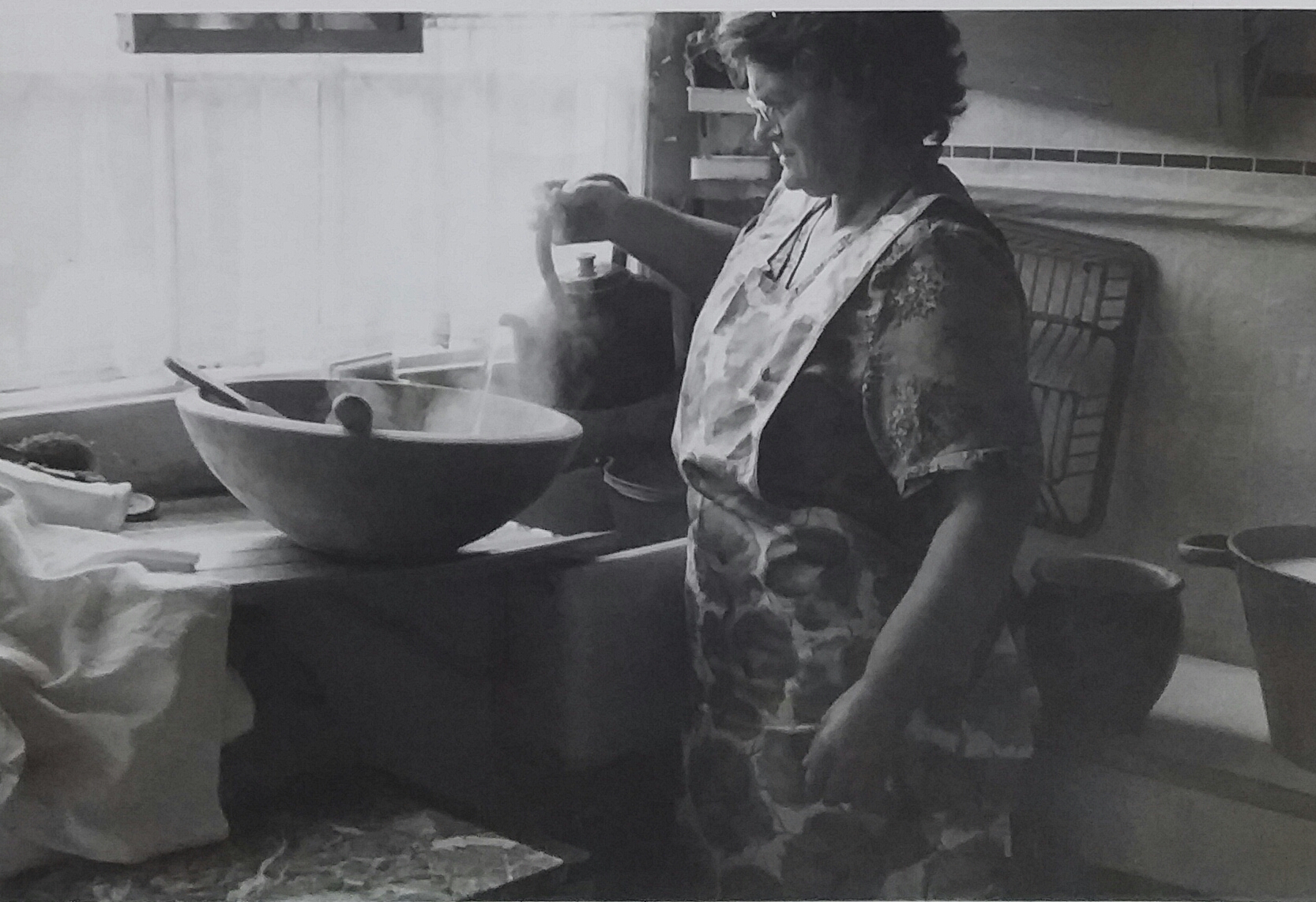
Scalding the utensils
Scalding wooden utensils with boiling water, then cooling with cold water so the butter does not stick to them.
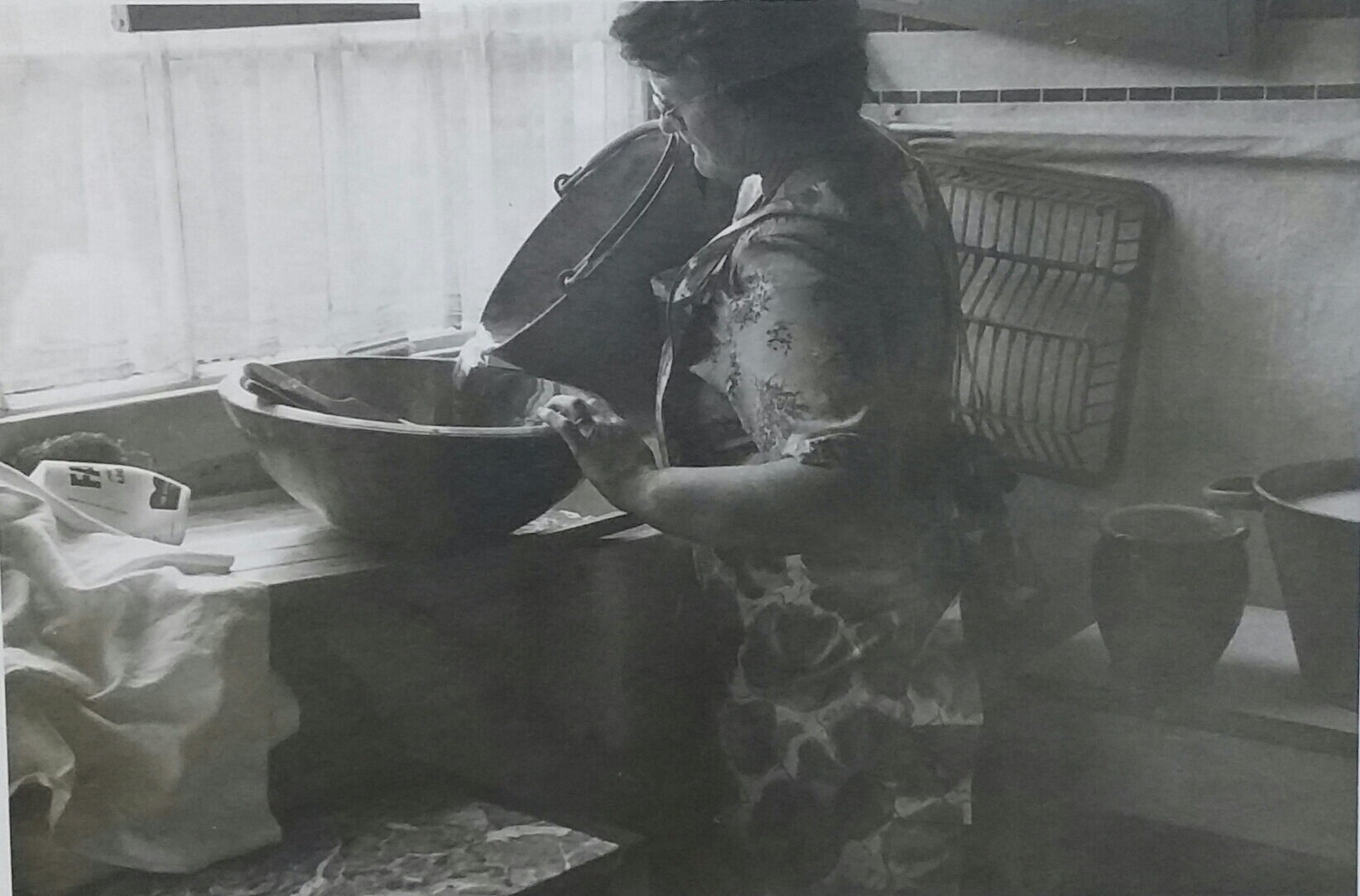
Cooling with cold water
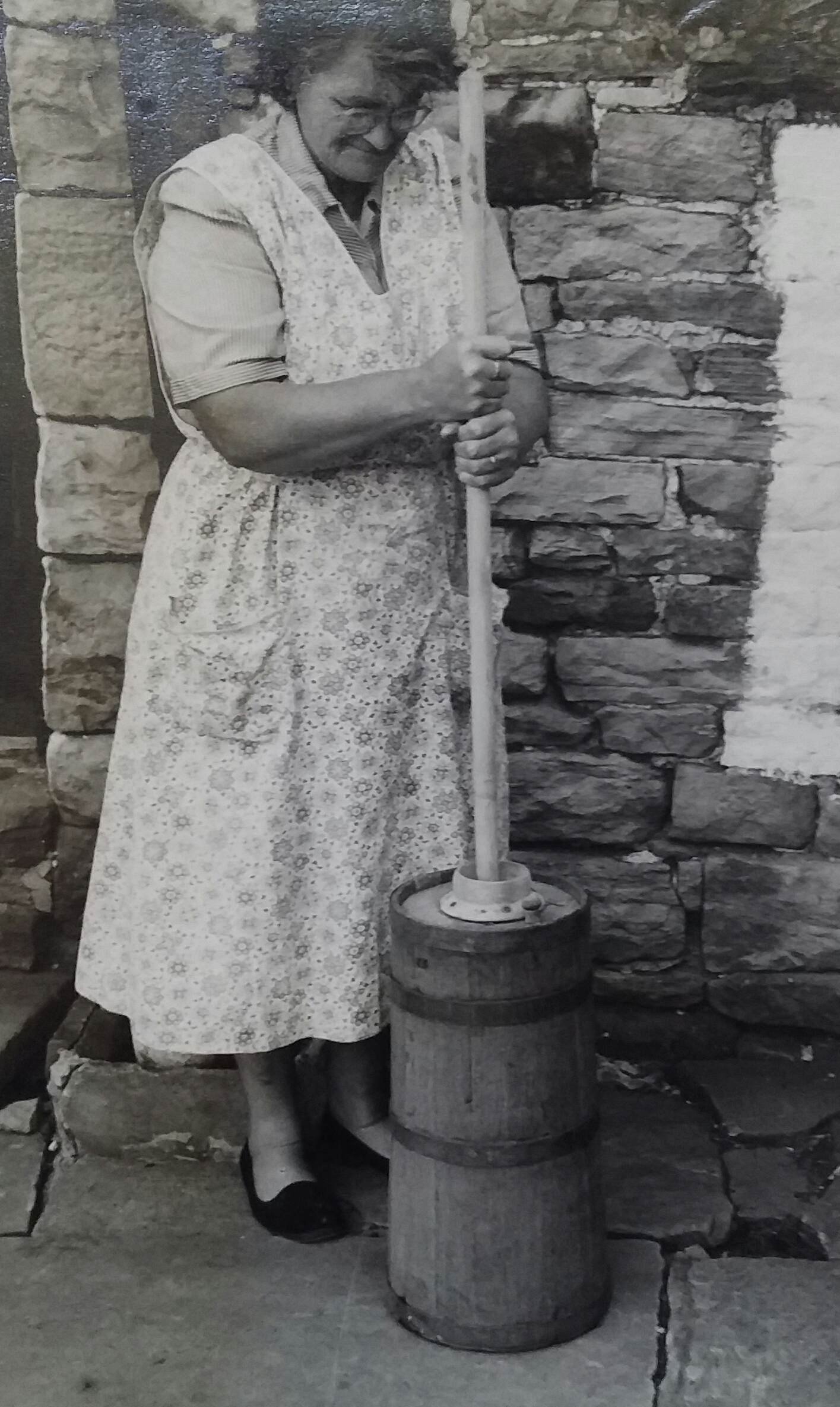
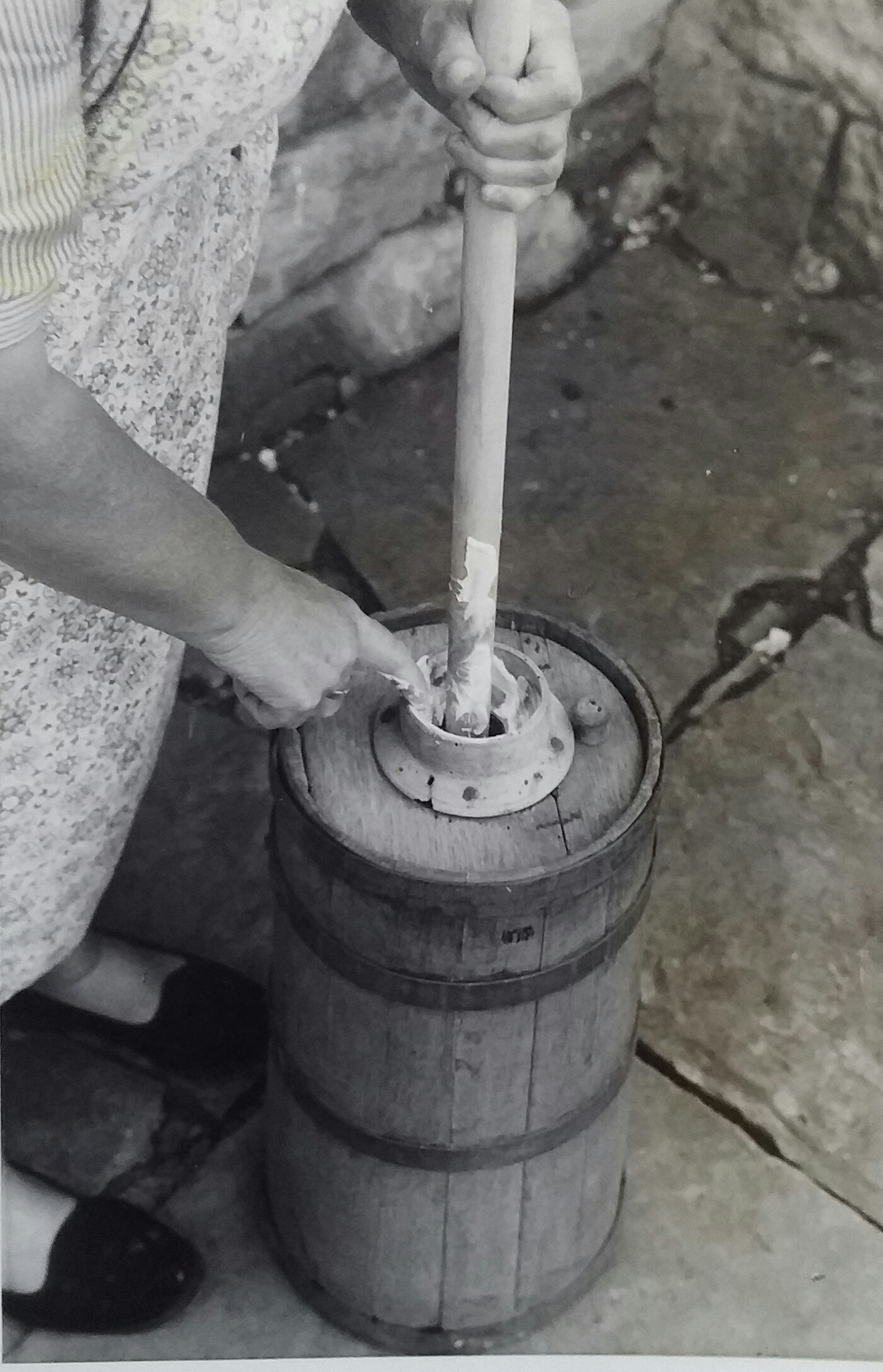
Churning the cream until it turns into butter.
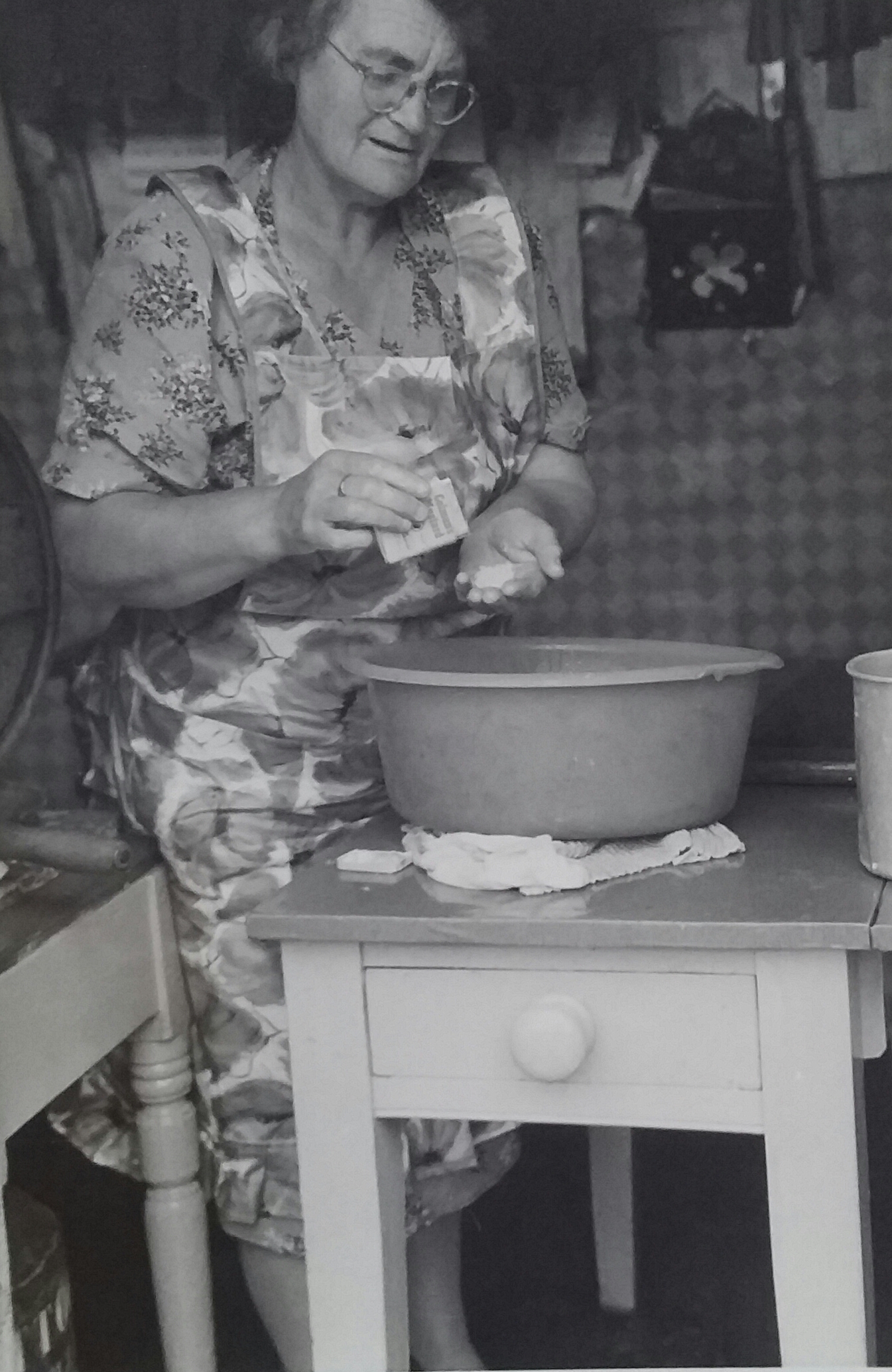
Rubbing hands with salt or mustard, then dipping into hot and then cold water. This ensures the butter does not stick to hands when working with it.
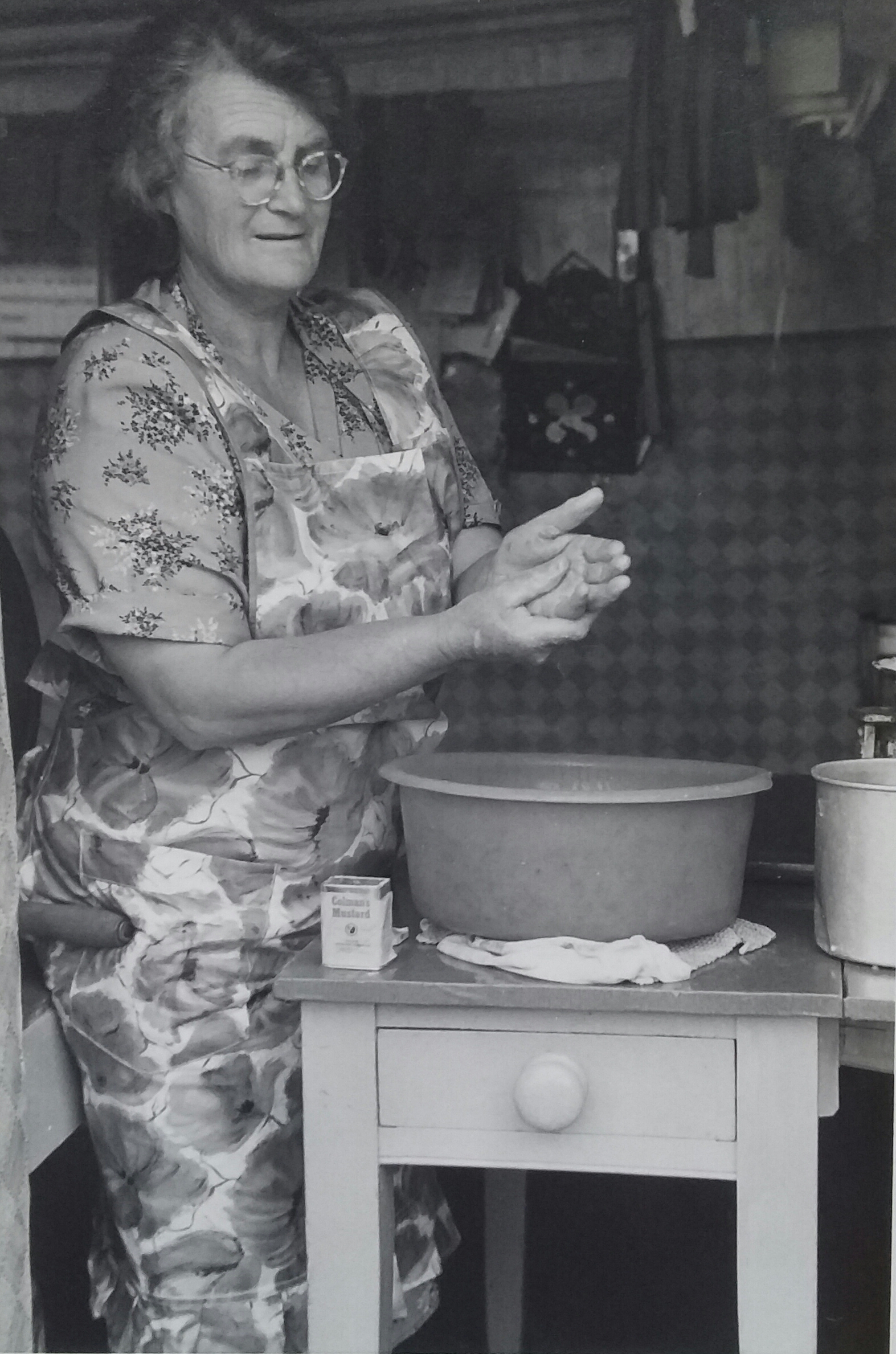
You must have cool hands to make butter
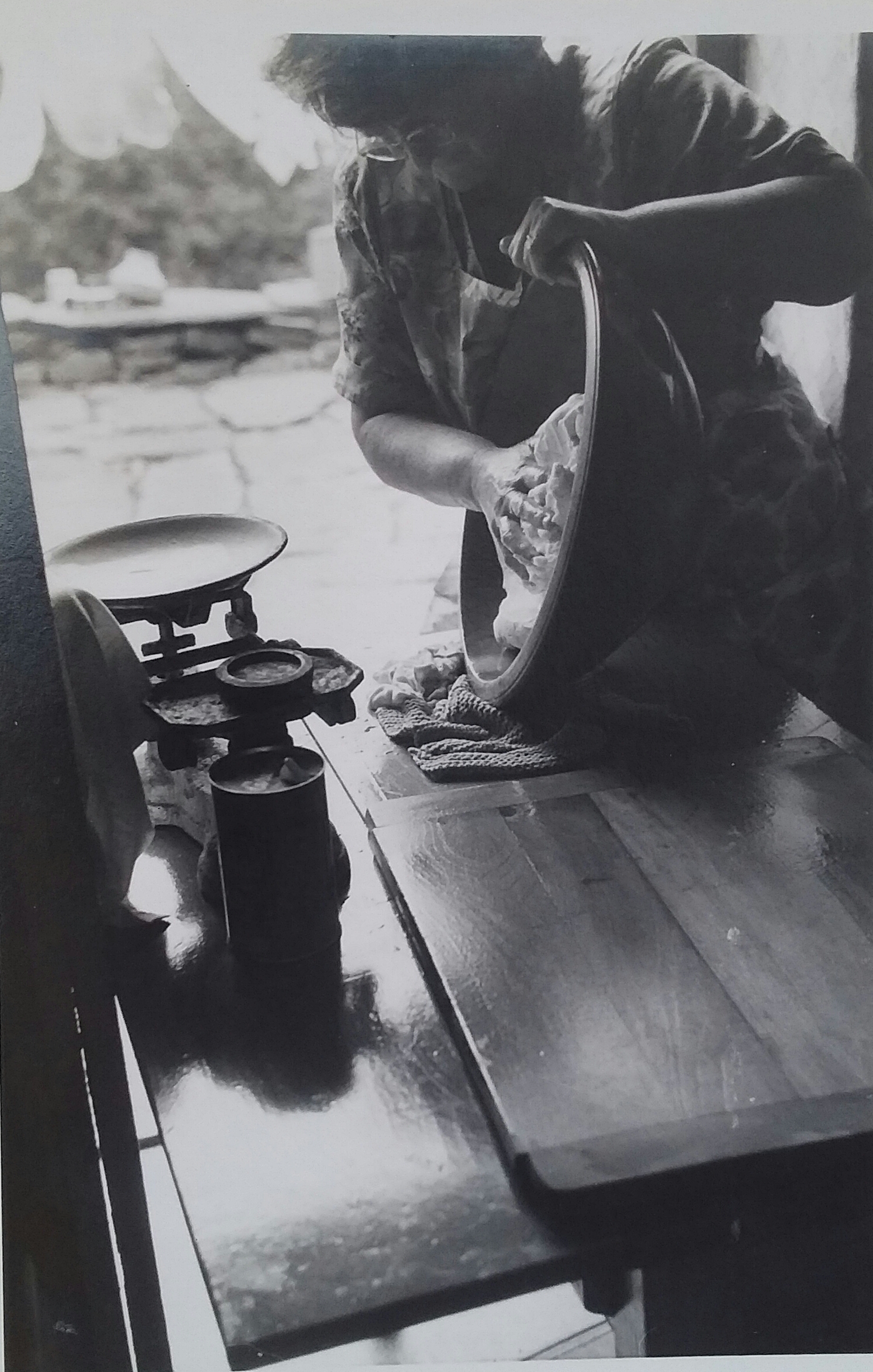
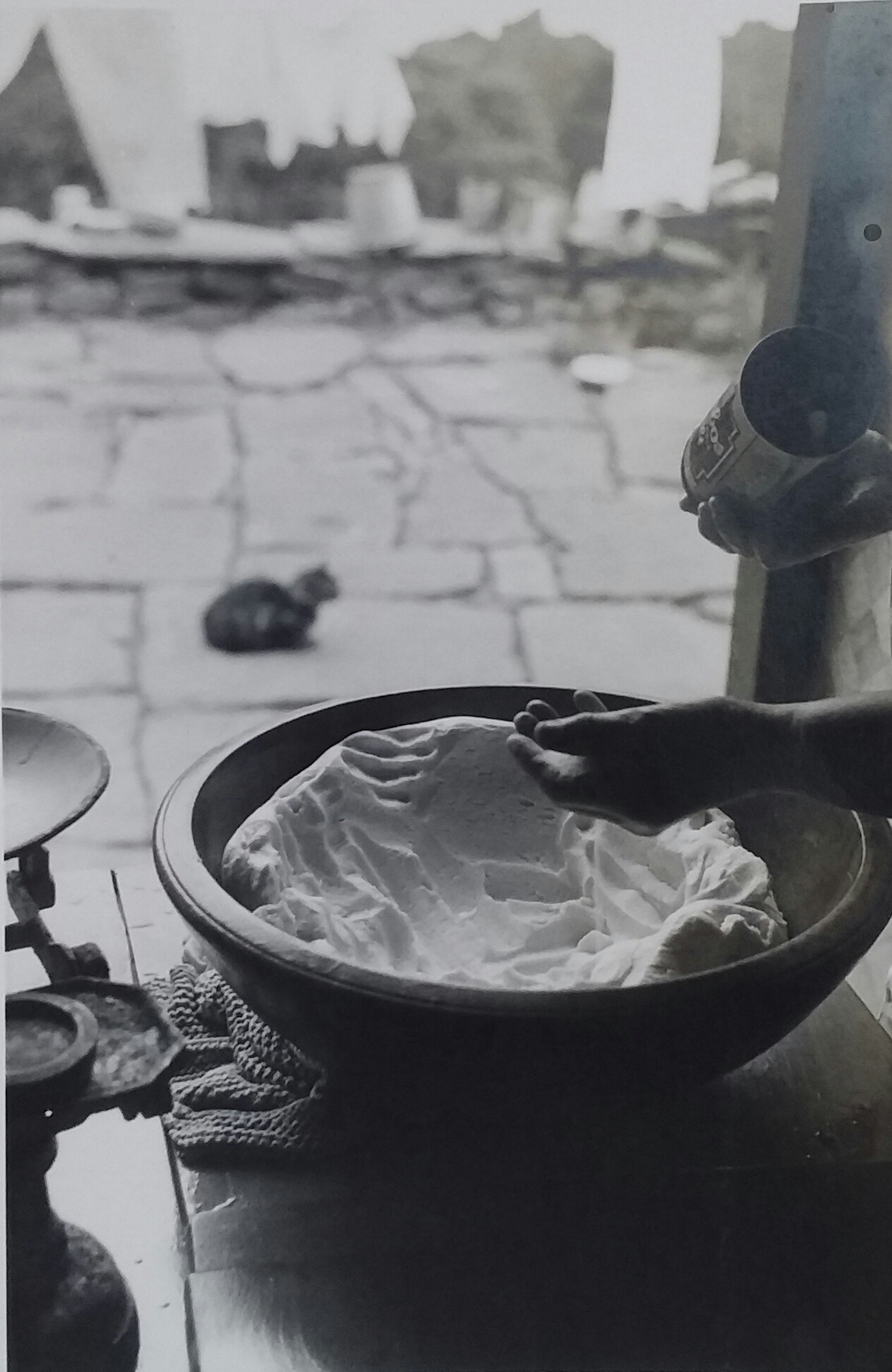
Adding salt to the butter and mixing well.
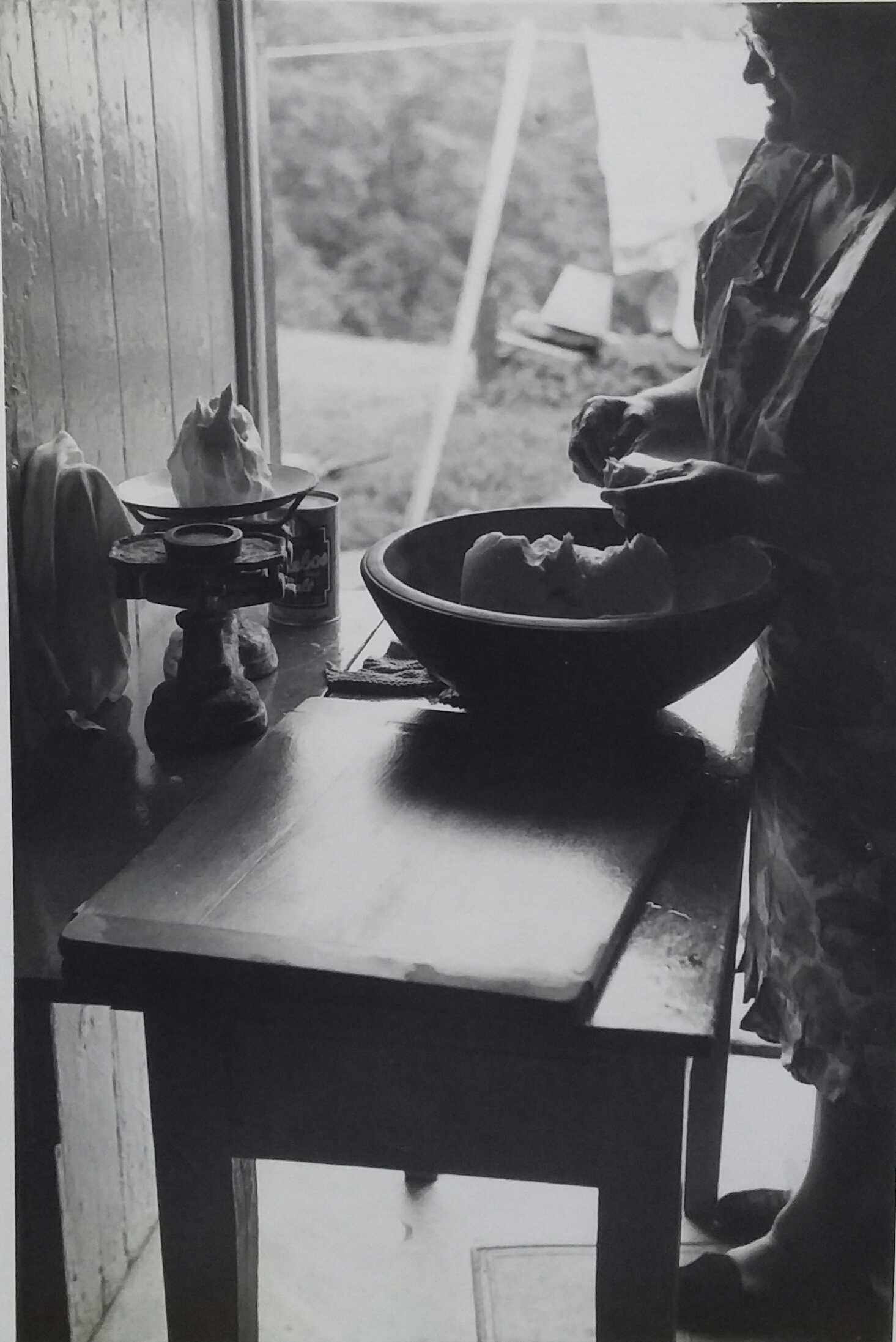
Weighing the butter into pounds.
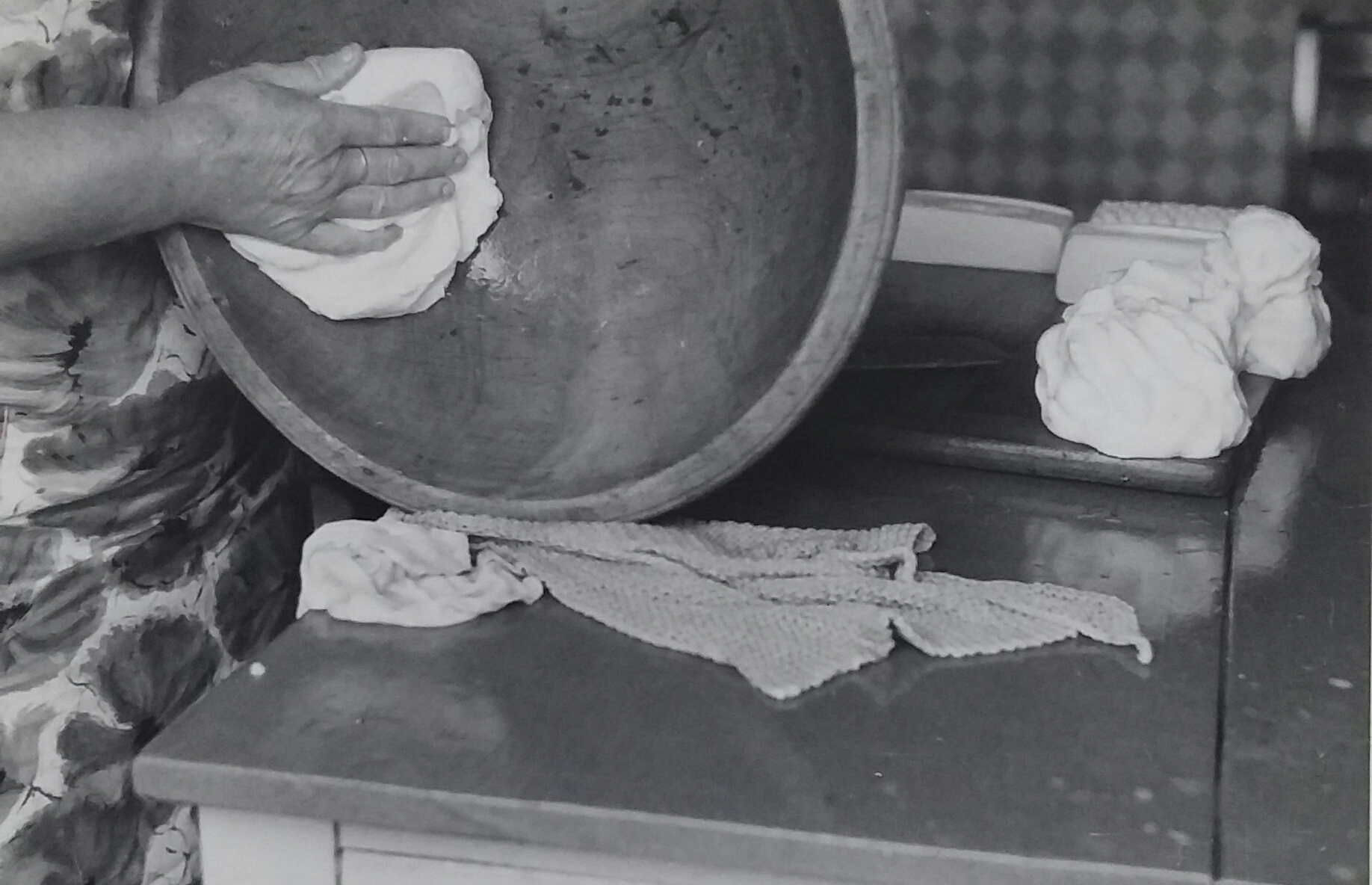
Working the butter a second time to get the last drop of churn milk out.
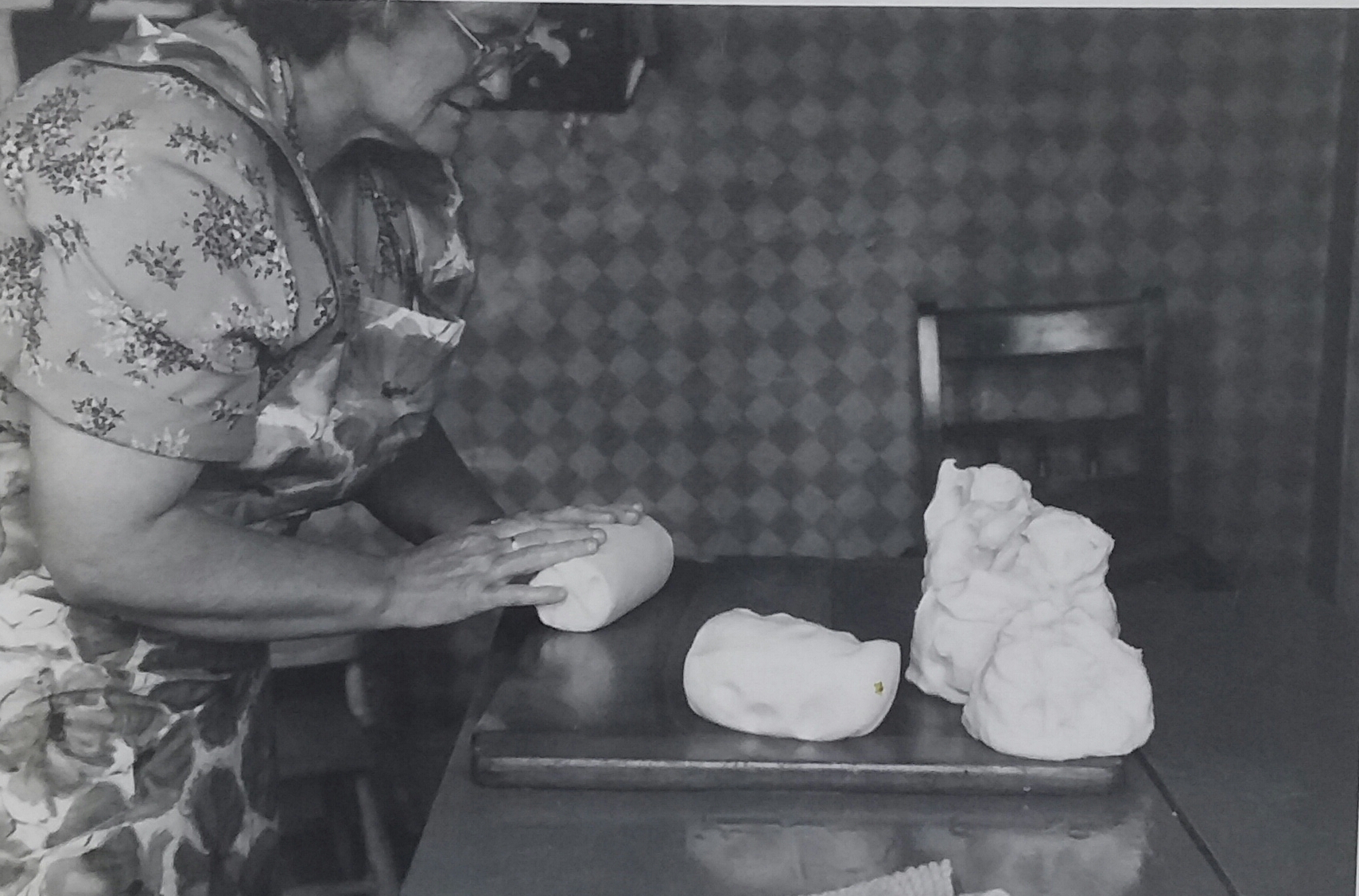
Rolling onto a wooden table ready to shape in pound blocks.
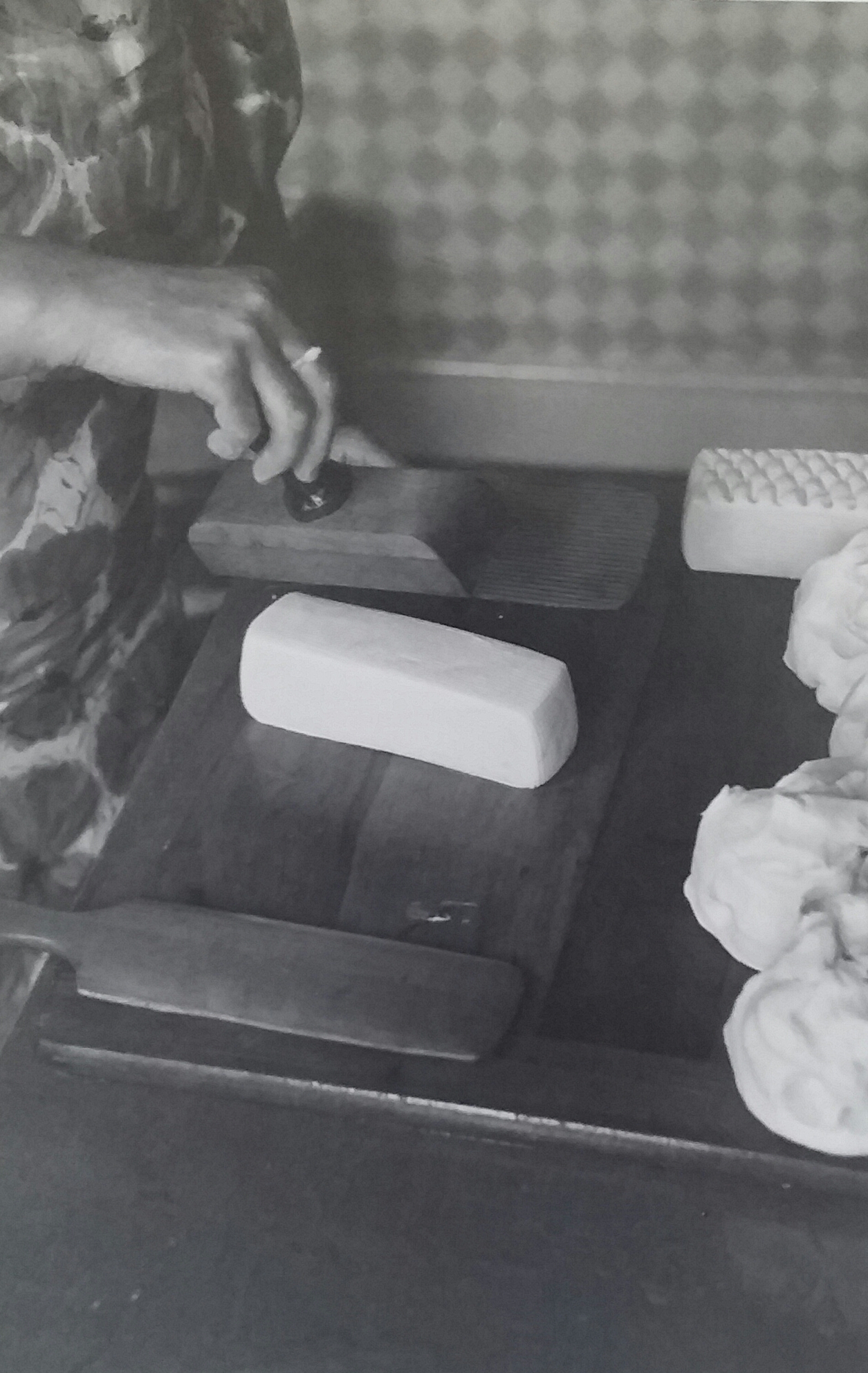
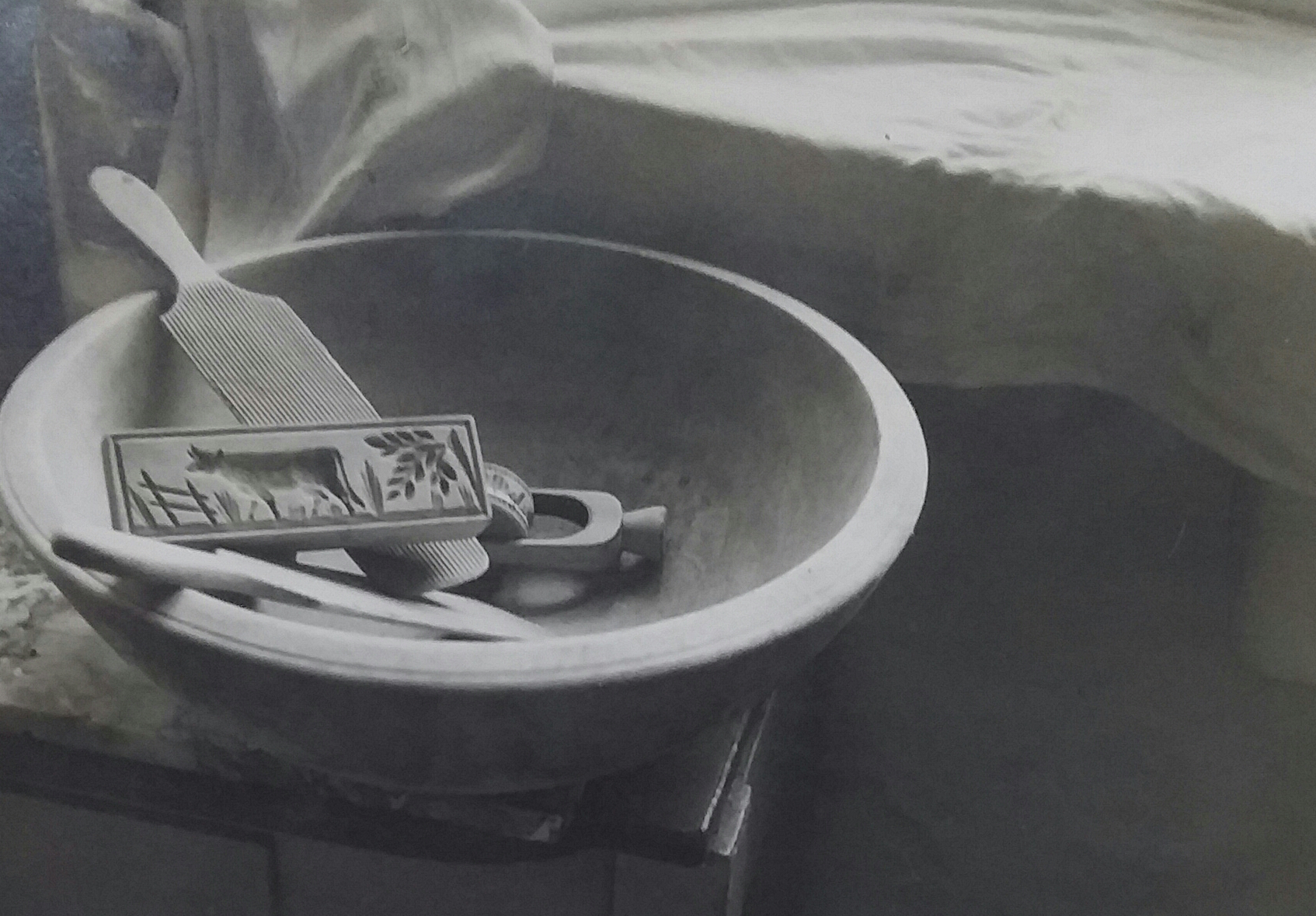
Marking the butter
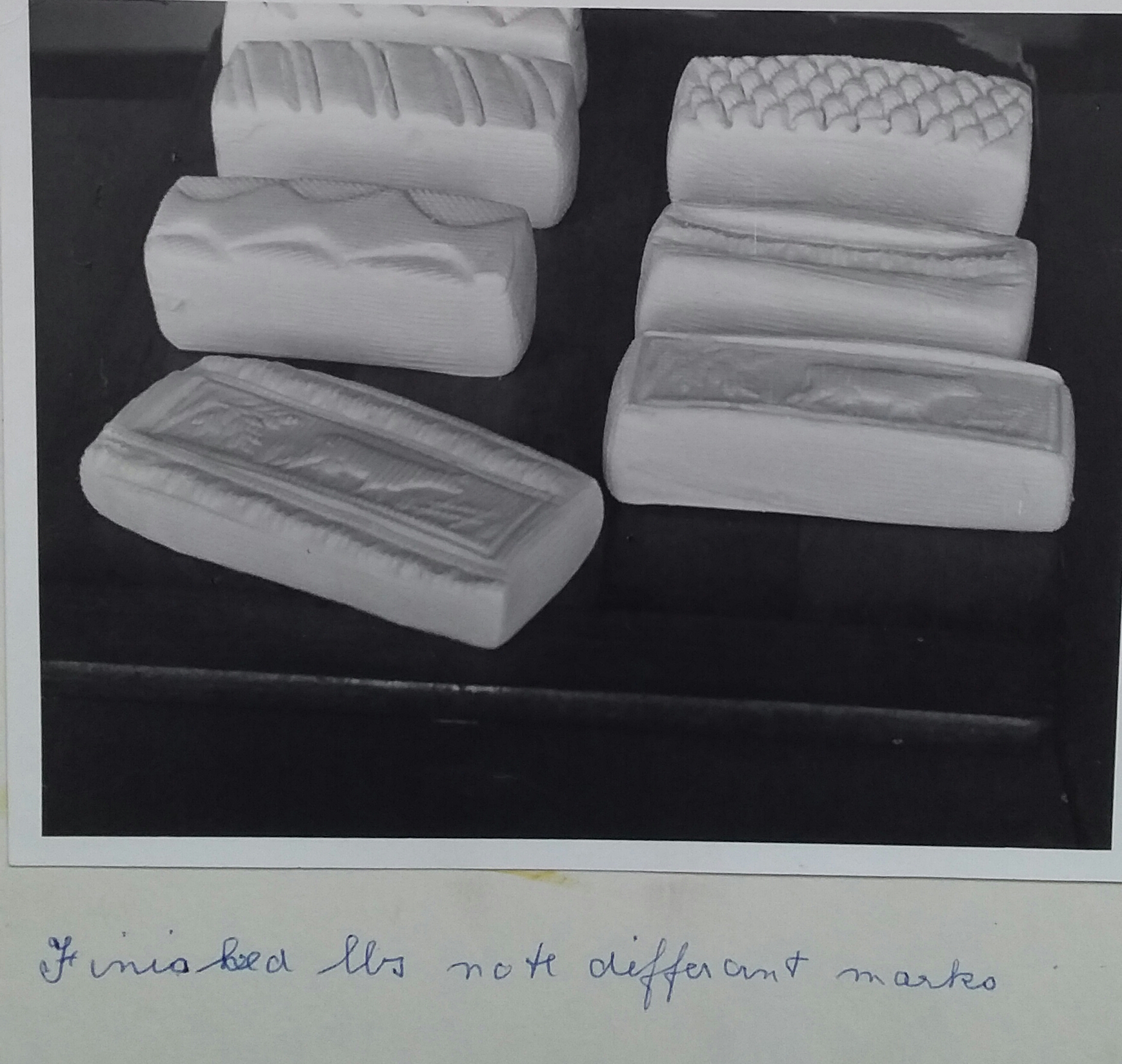
Finished pounds – note the different marks.
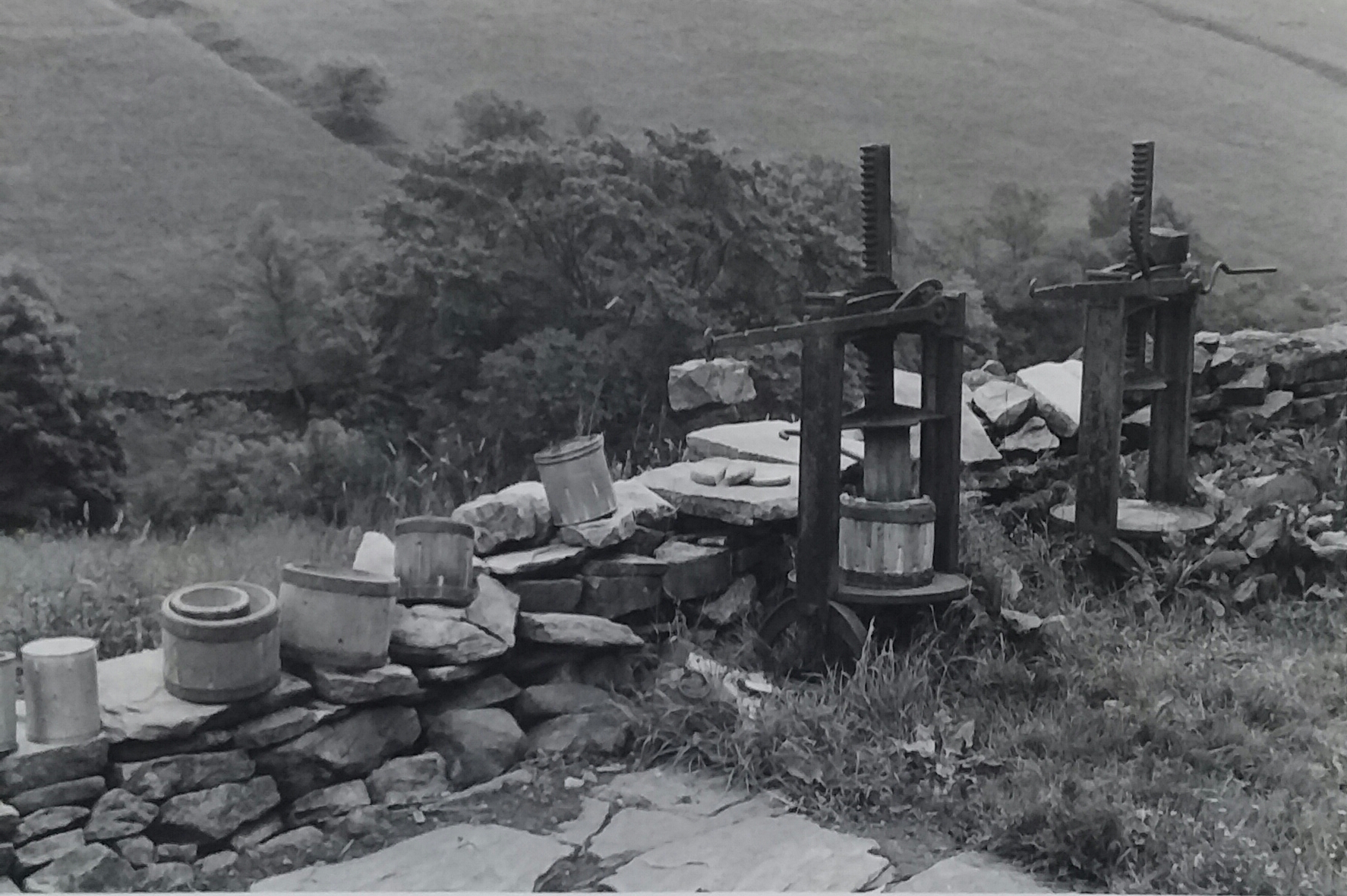
Cheese presses - wooden cheese vats and one cheese in the press. Metal cheese presses date from the middle of the 19th century.
Mrs Scott's notes accompany all the following images
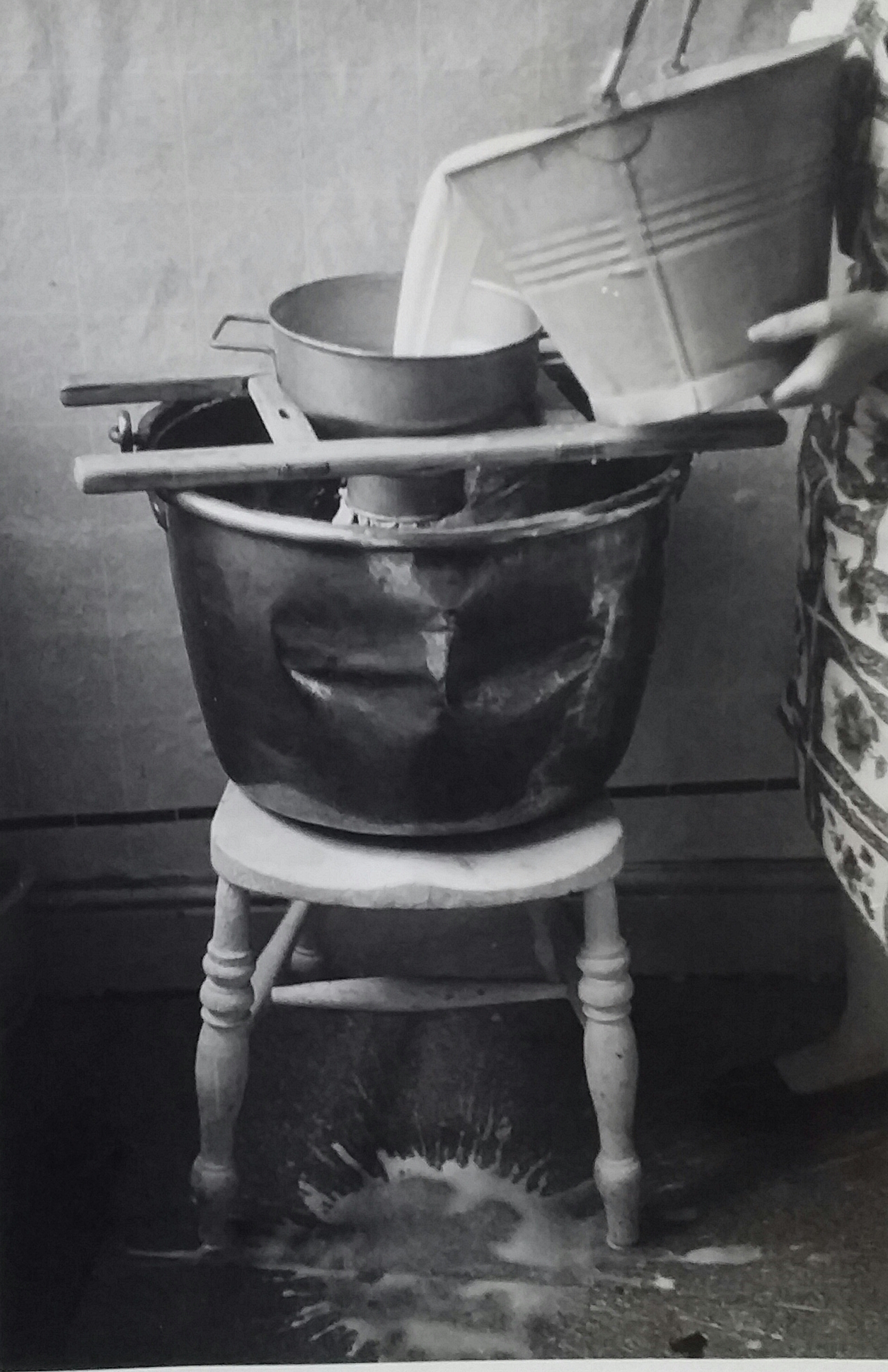
The evening’s milk being siled into the cheese kettle.
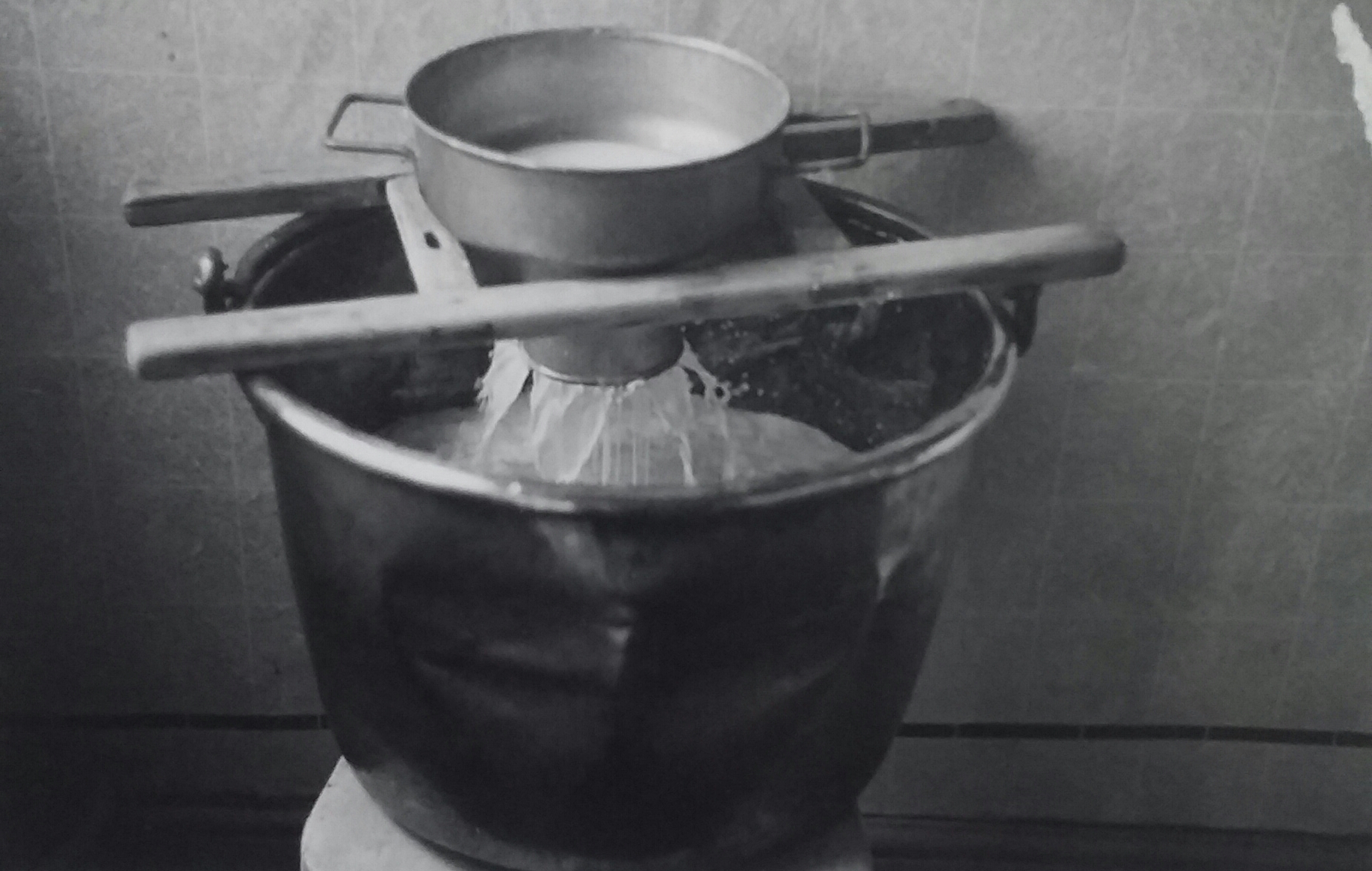
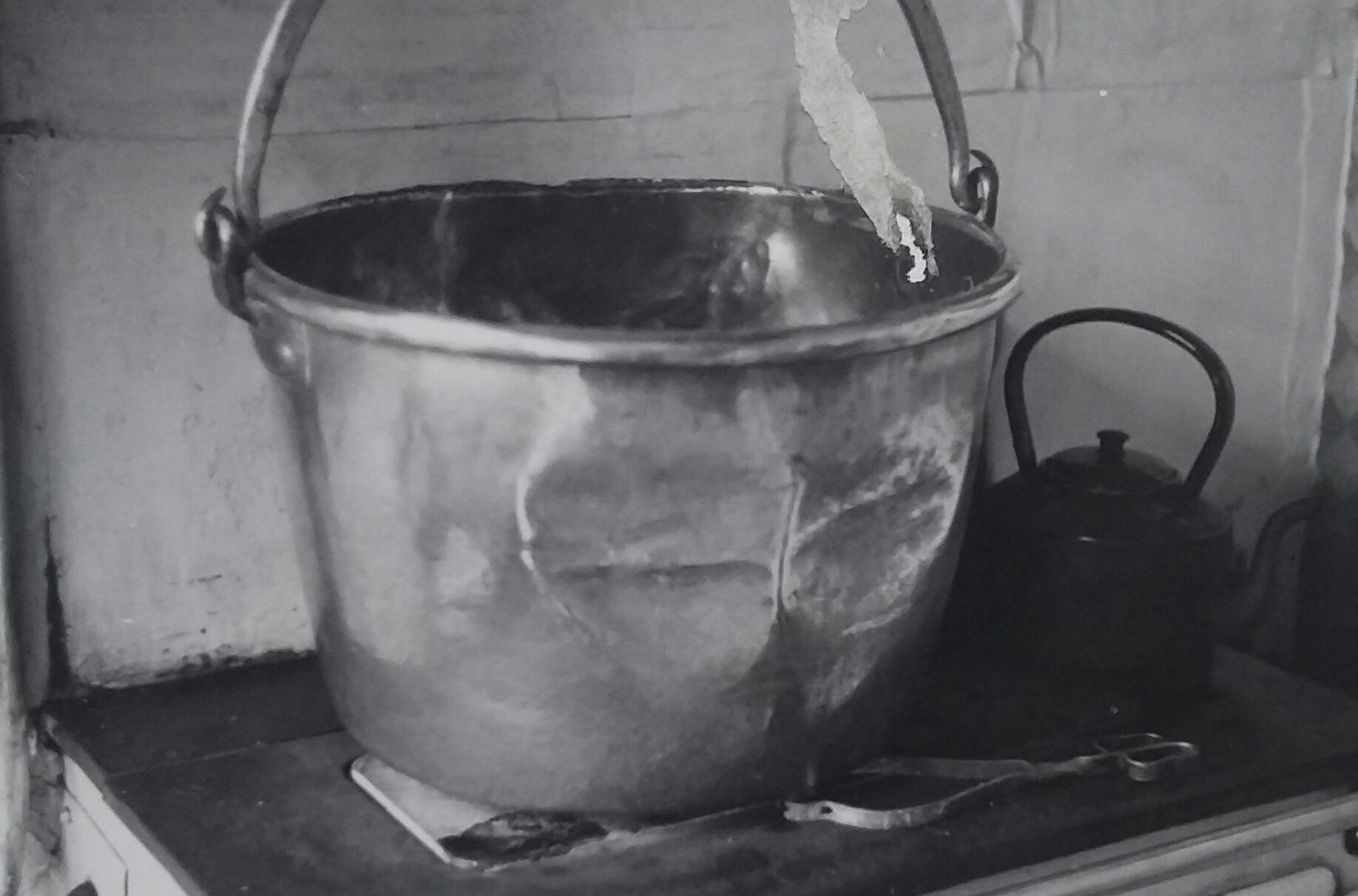
No cream has been skimmed off the set milk, which is warmed up.
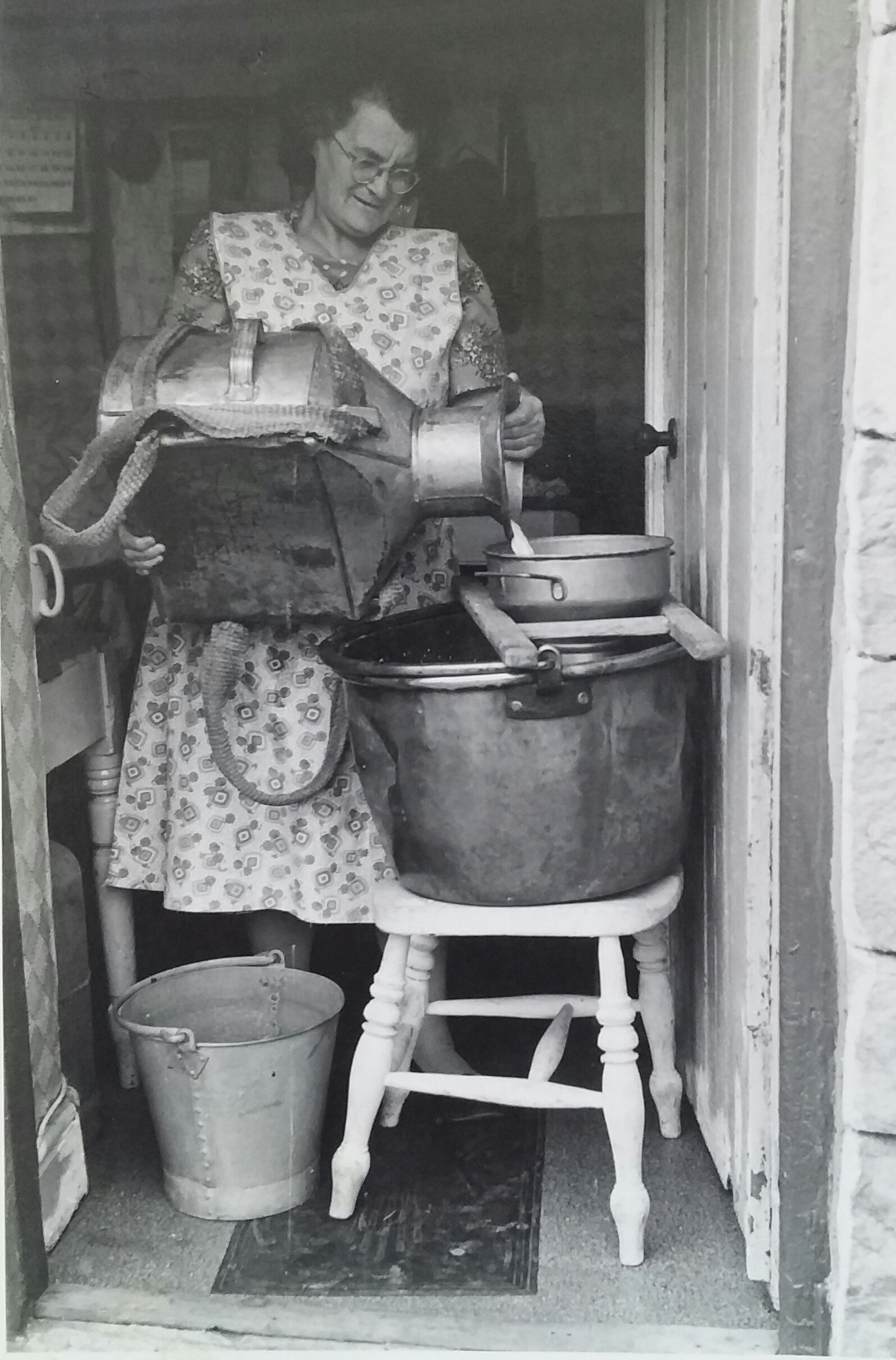
Adding the morning’s milk still warm from the cows – note the backcan.
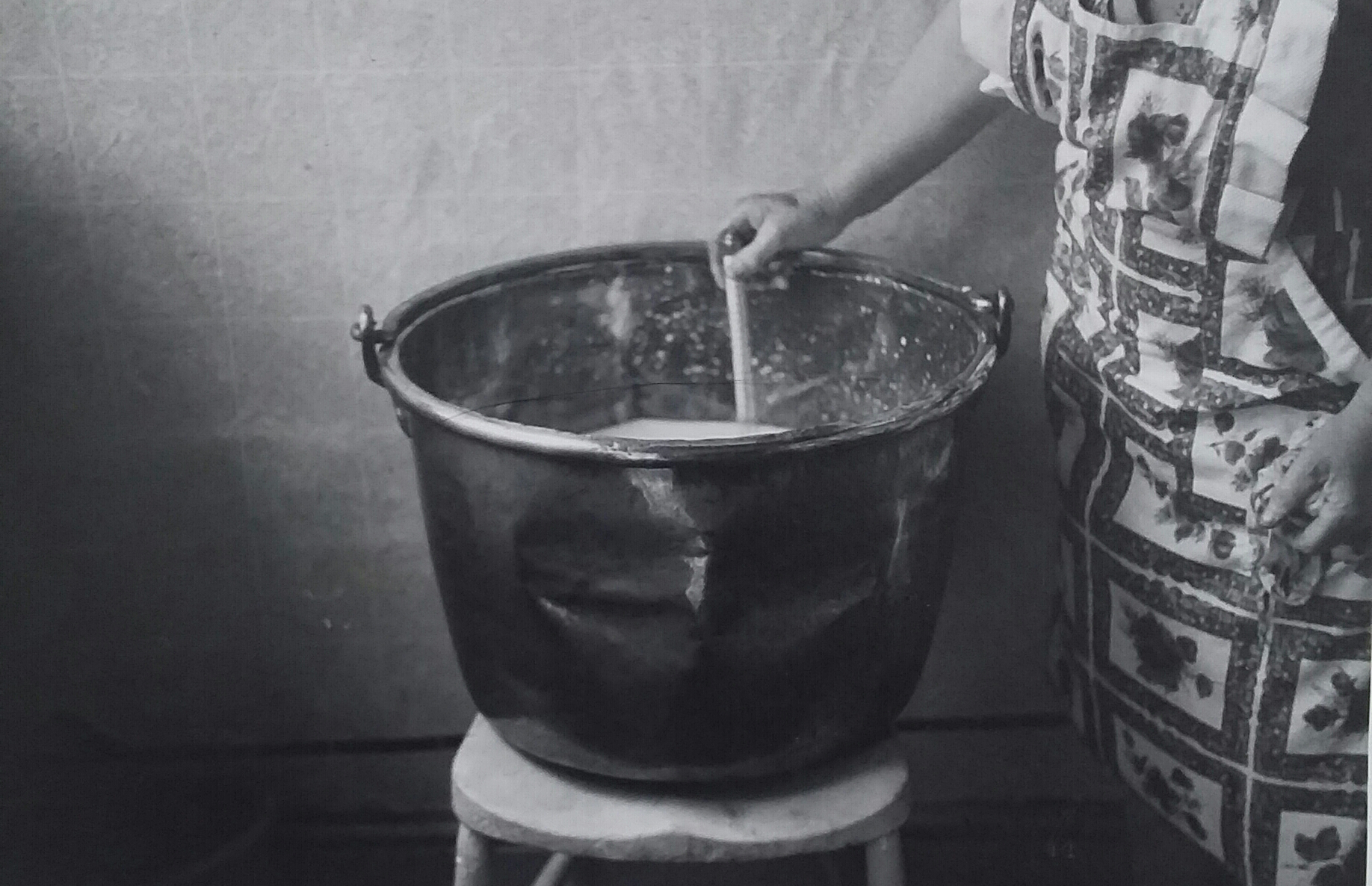
Controlling the temperature before adding the rennet.
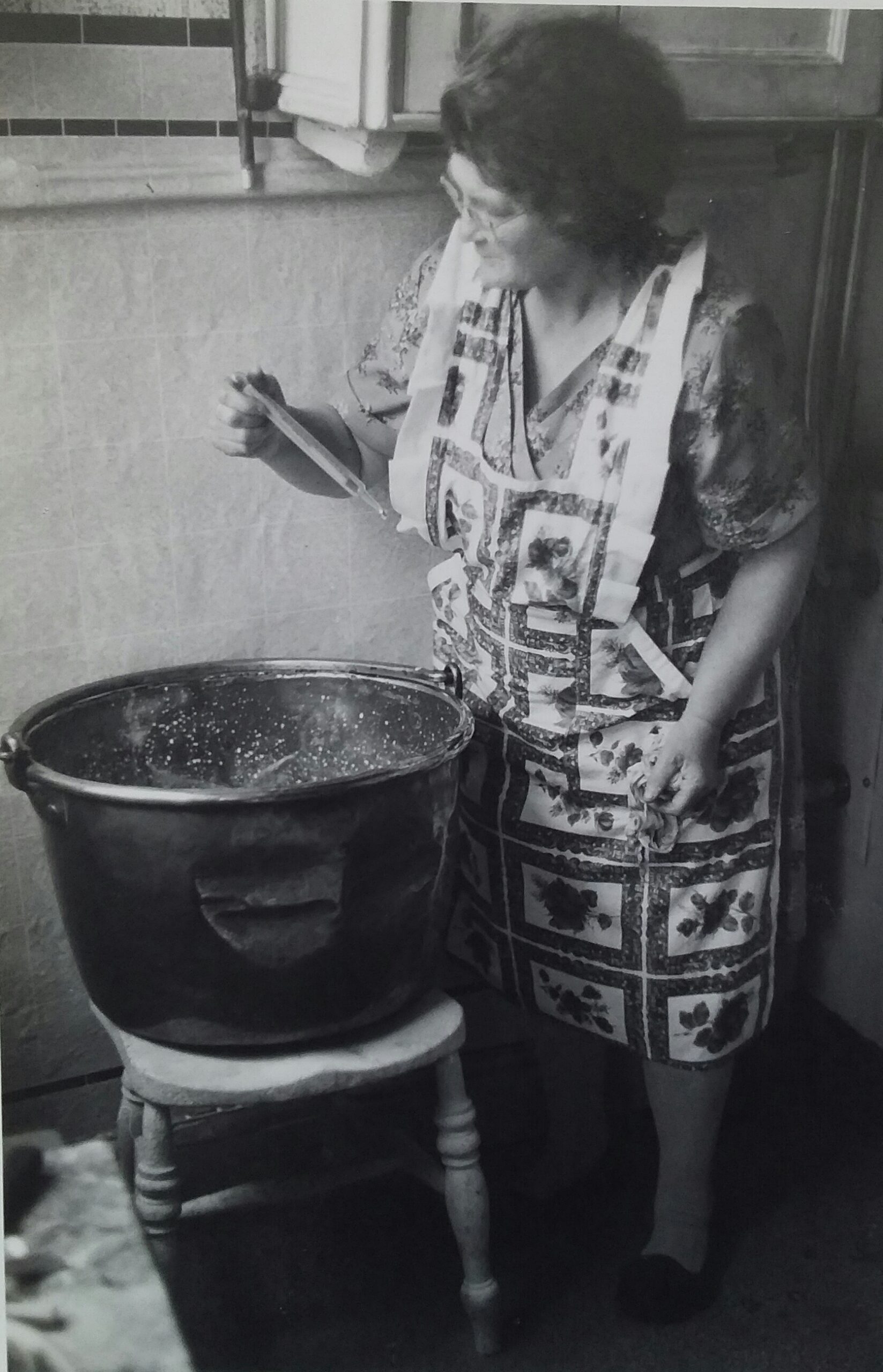
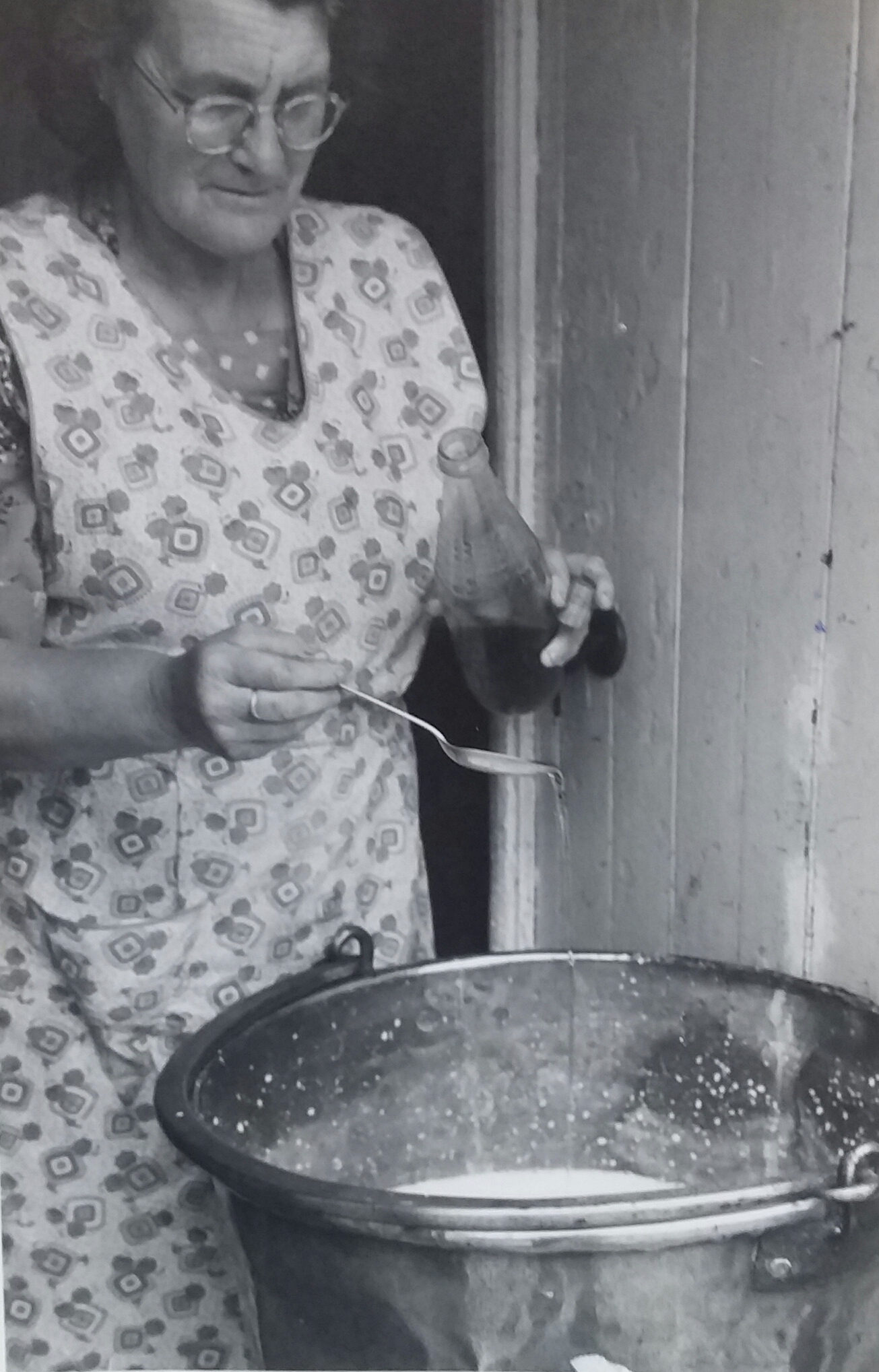
When the temperature is correct, rennet is added
Approx one dessert spoon to six gallons of milk and then left to stand for one hour.
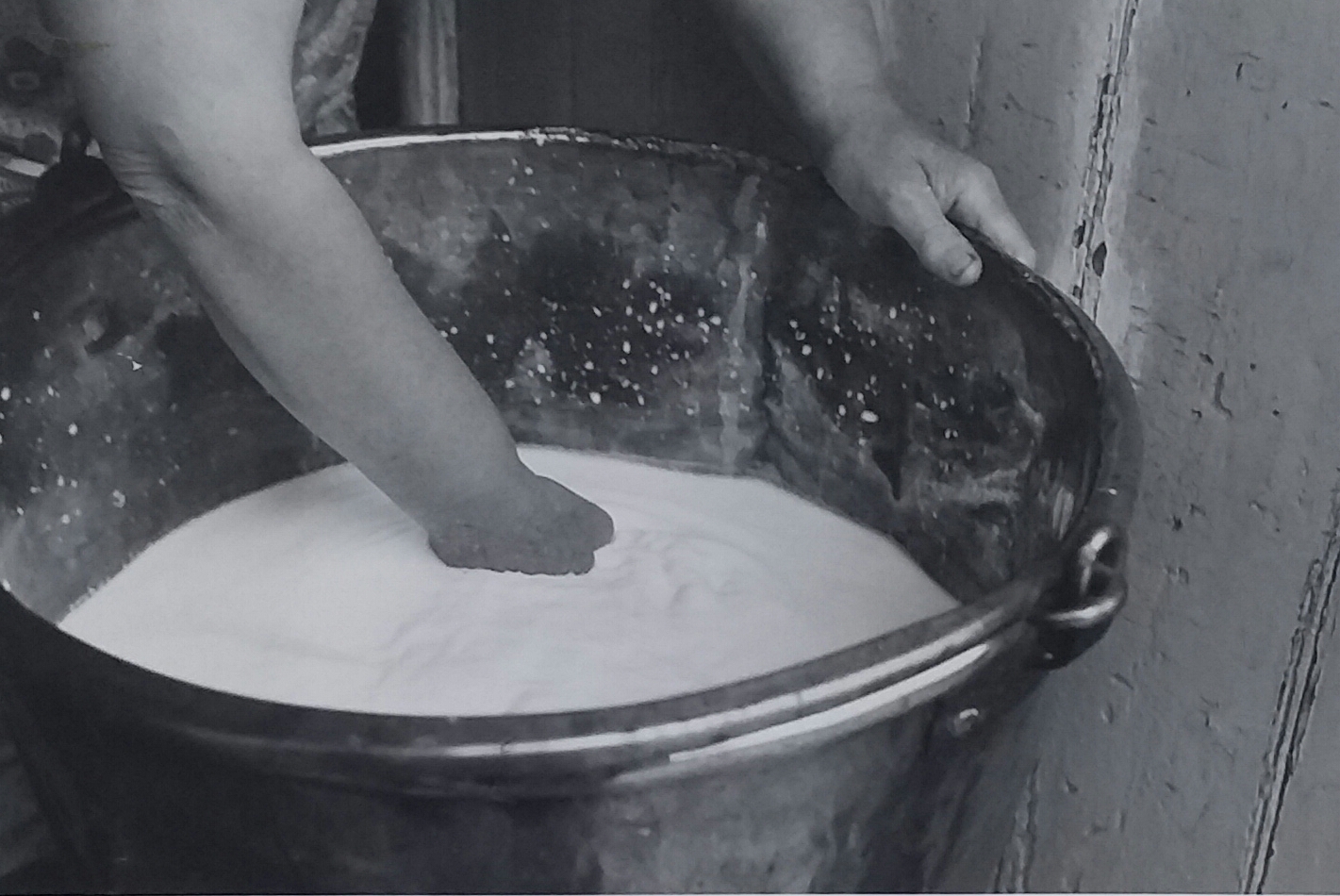
Making sure the rennet is evenly mixed by stirring with hand.
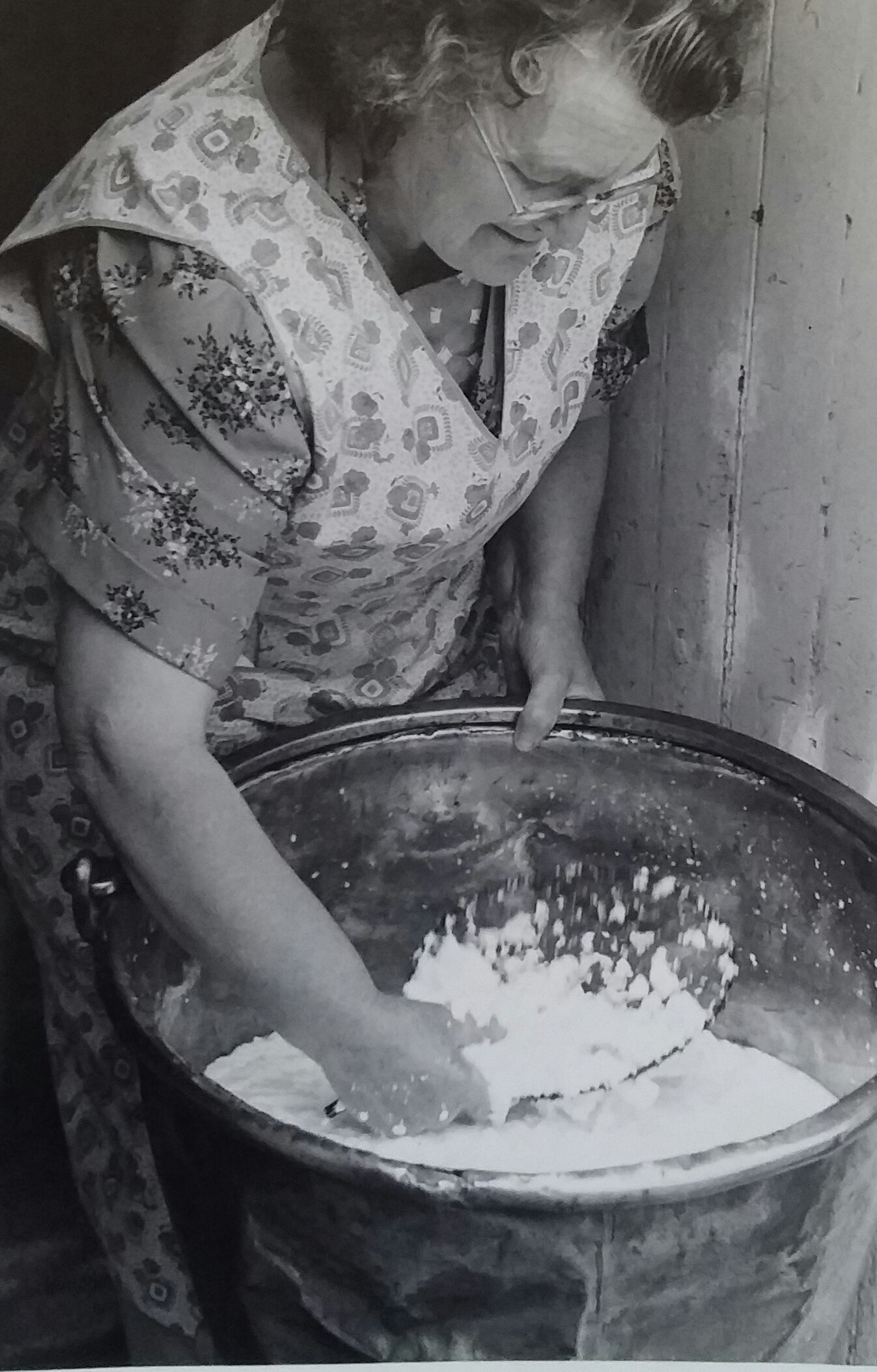
Parting whey from curds by cutting the curds.
Repeated and careful breaking up with a wire breaker.
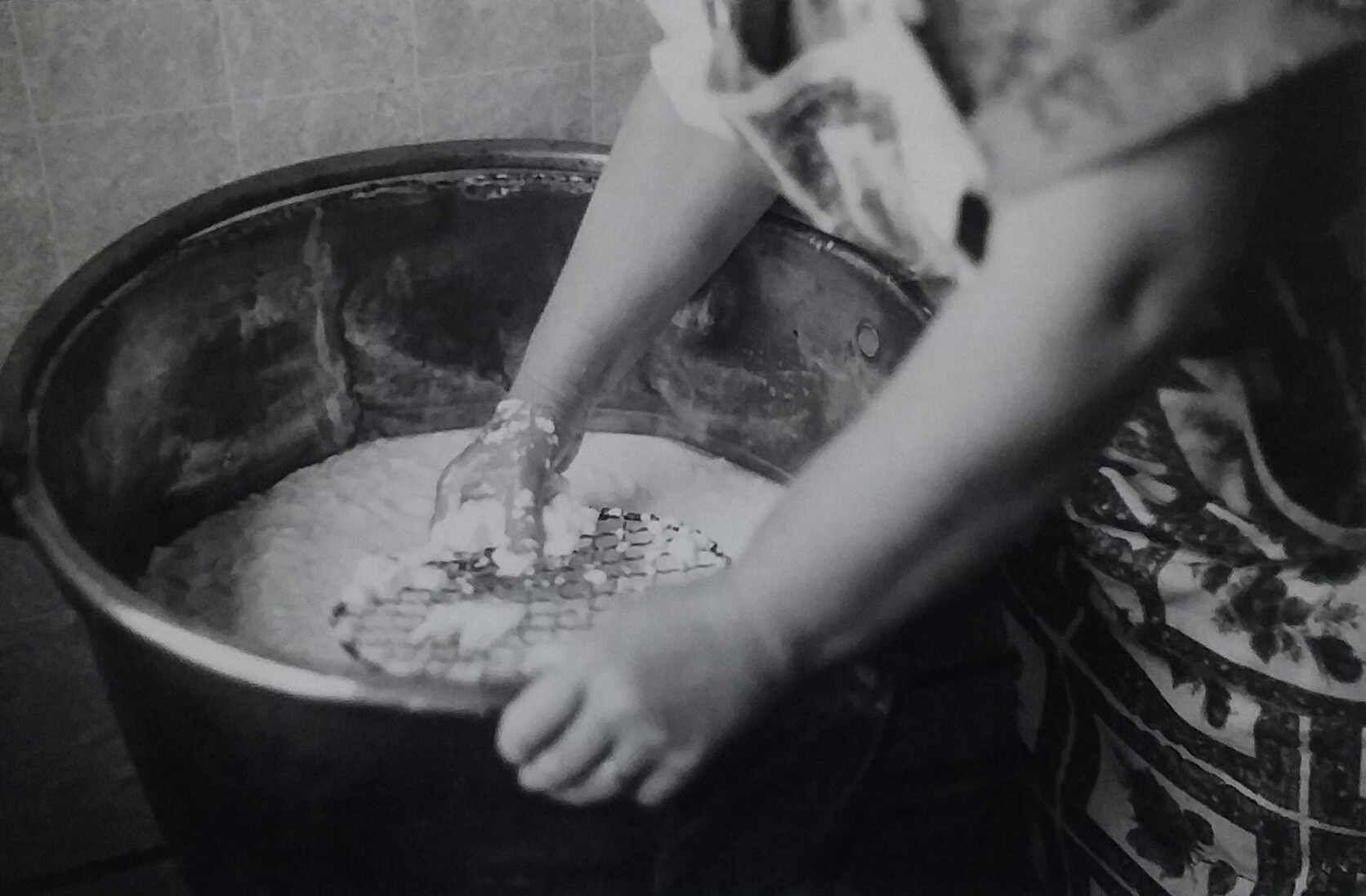
Stirring by hand to make sure the curds are all broken before draining of the whey.
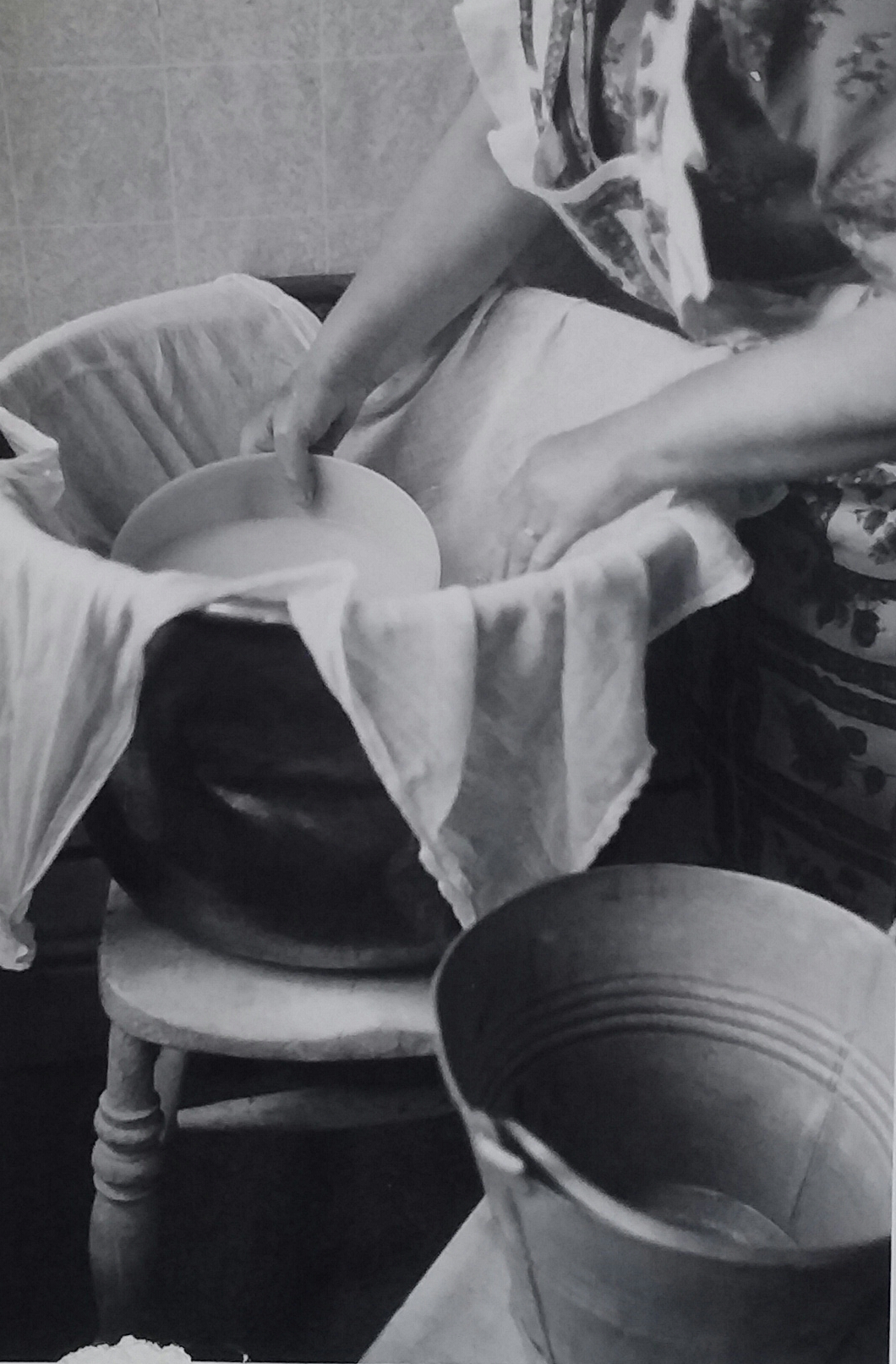
After standing half an hour for curds to settle, cover with a strainer (coarse cloth) and ladling off the whey.
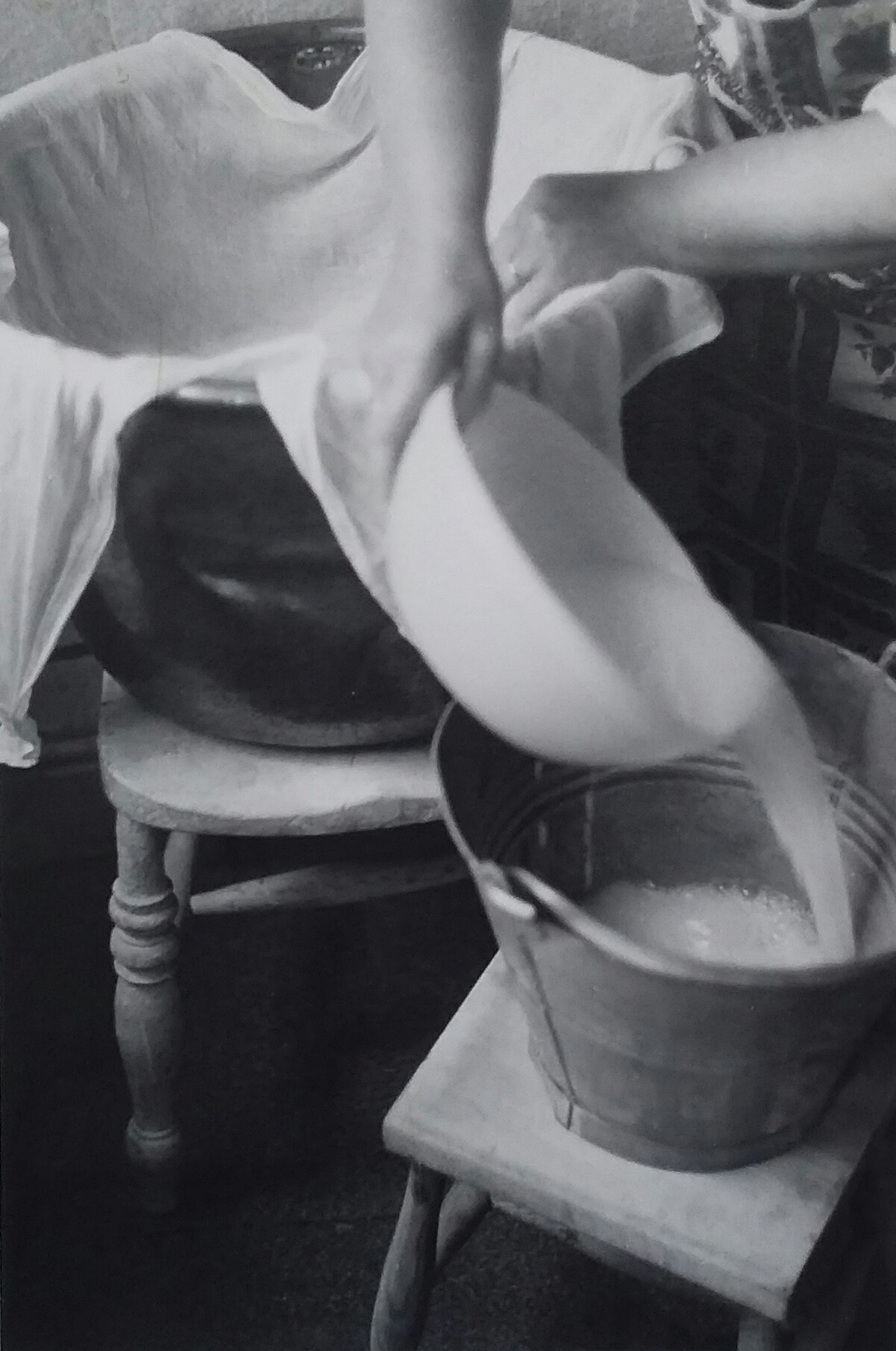
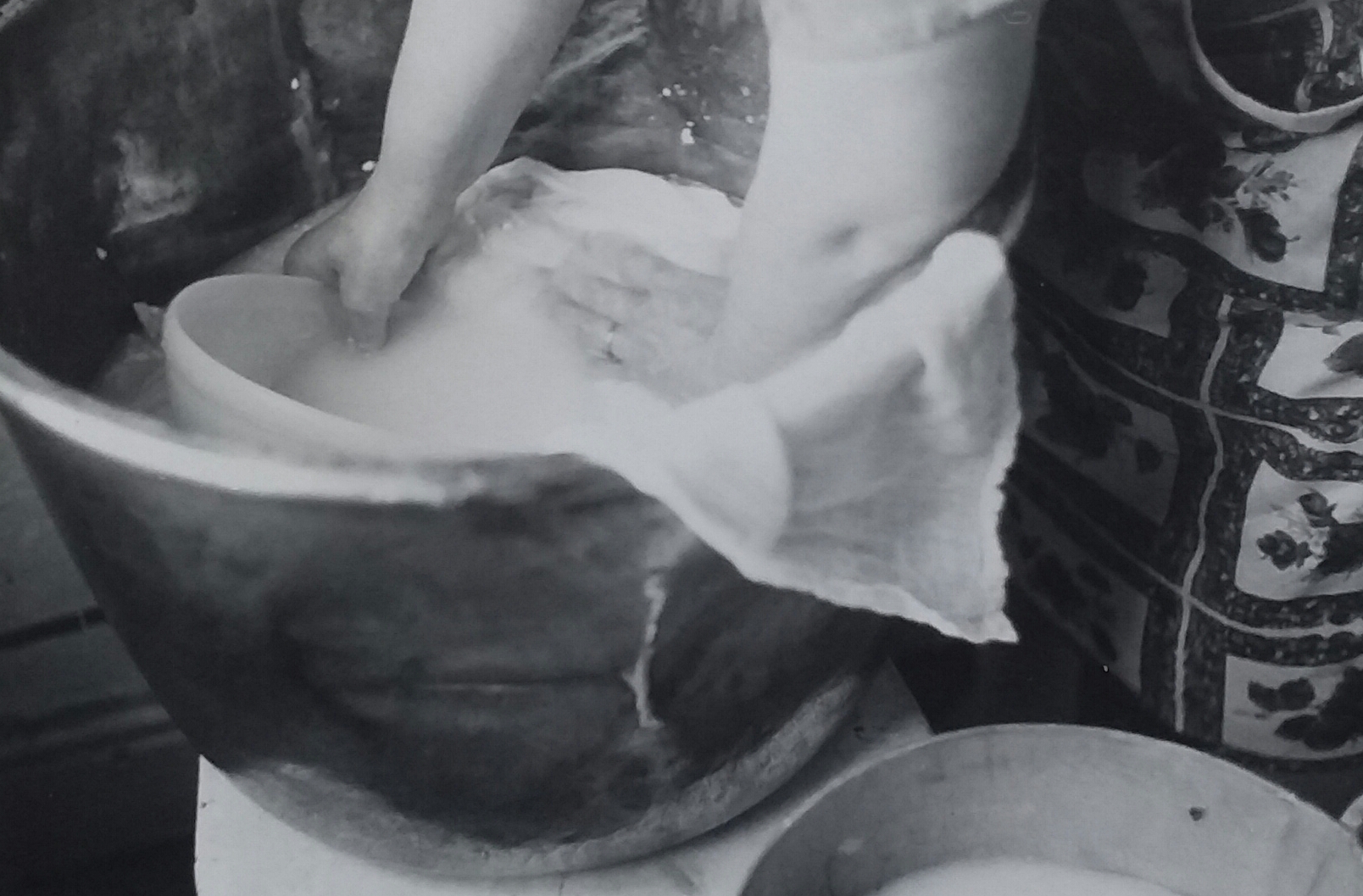
Squeezing down with hand to get all the whey out and ladling off with a small wooden bowl.
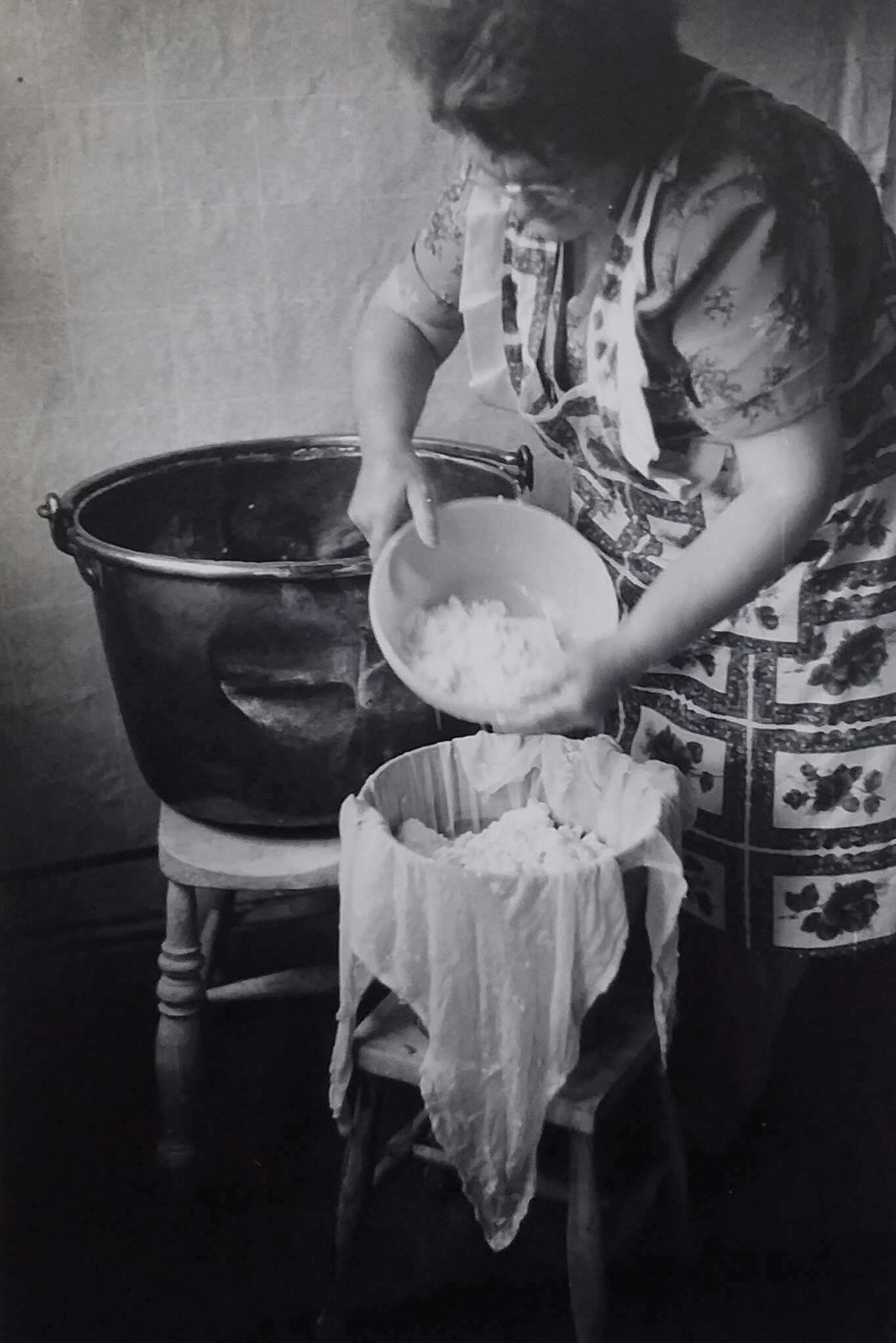
When dry enough, or as much whey as possible has been squeezed out, put strainer over bucket and ladle curds into cloth
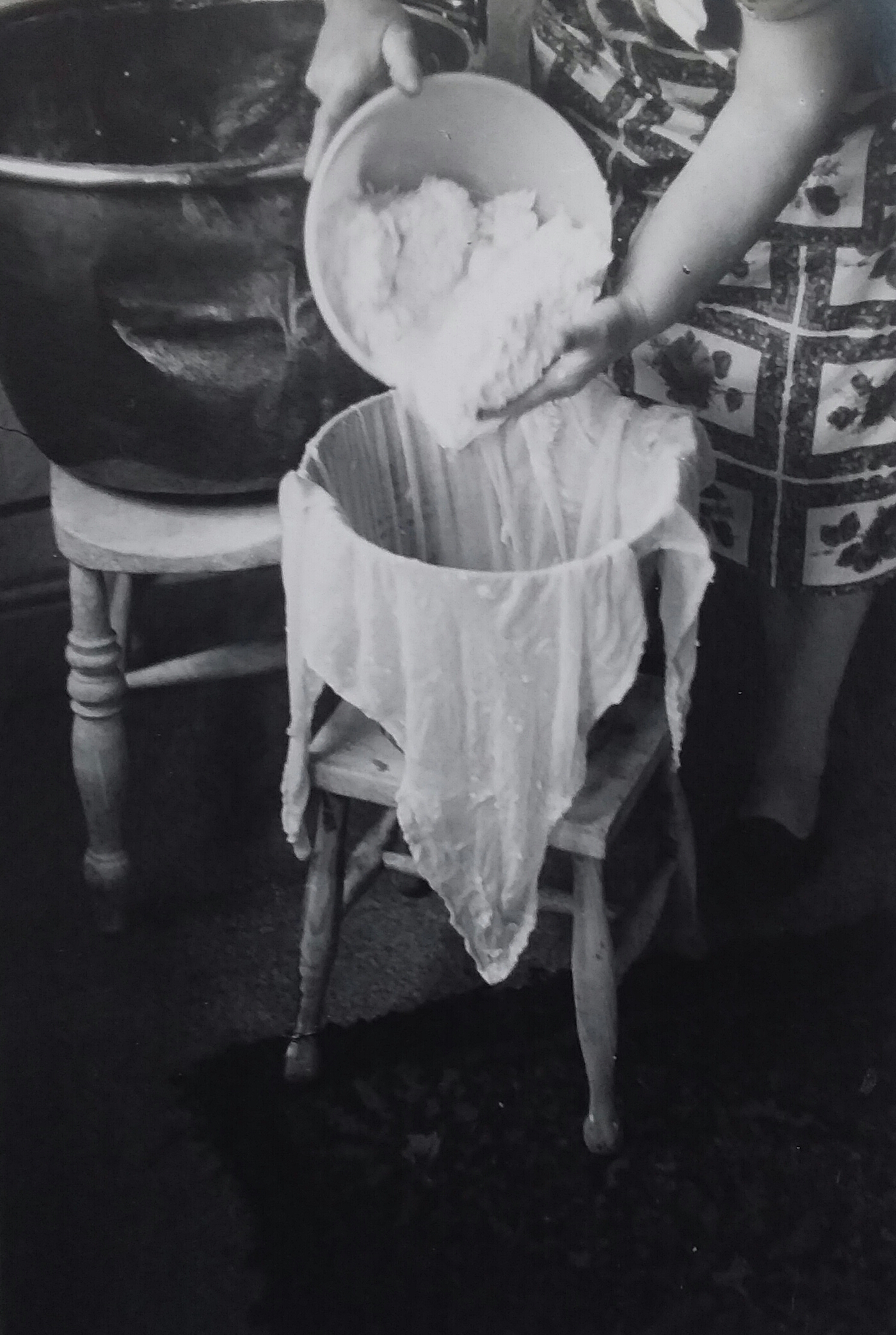
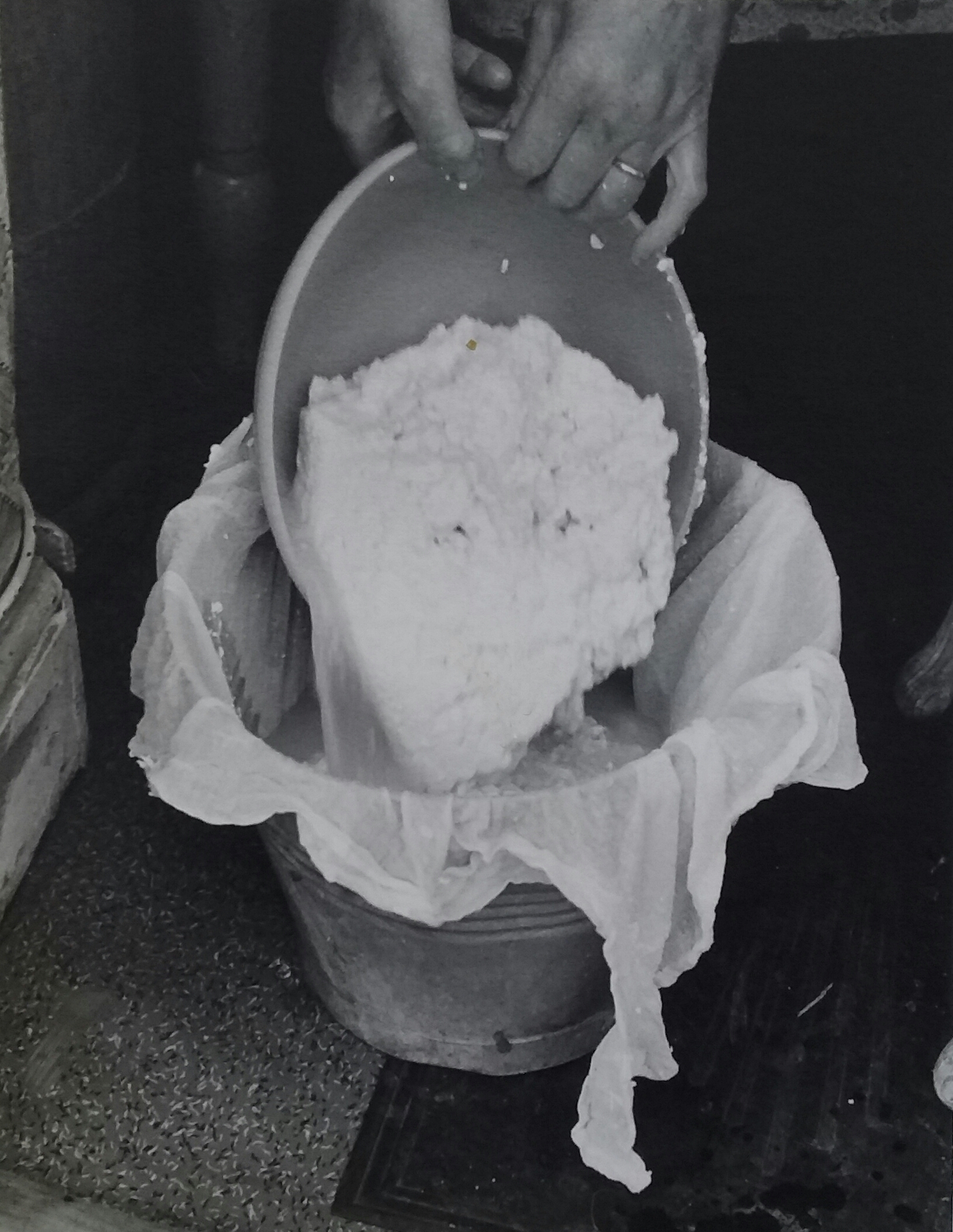
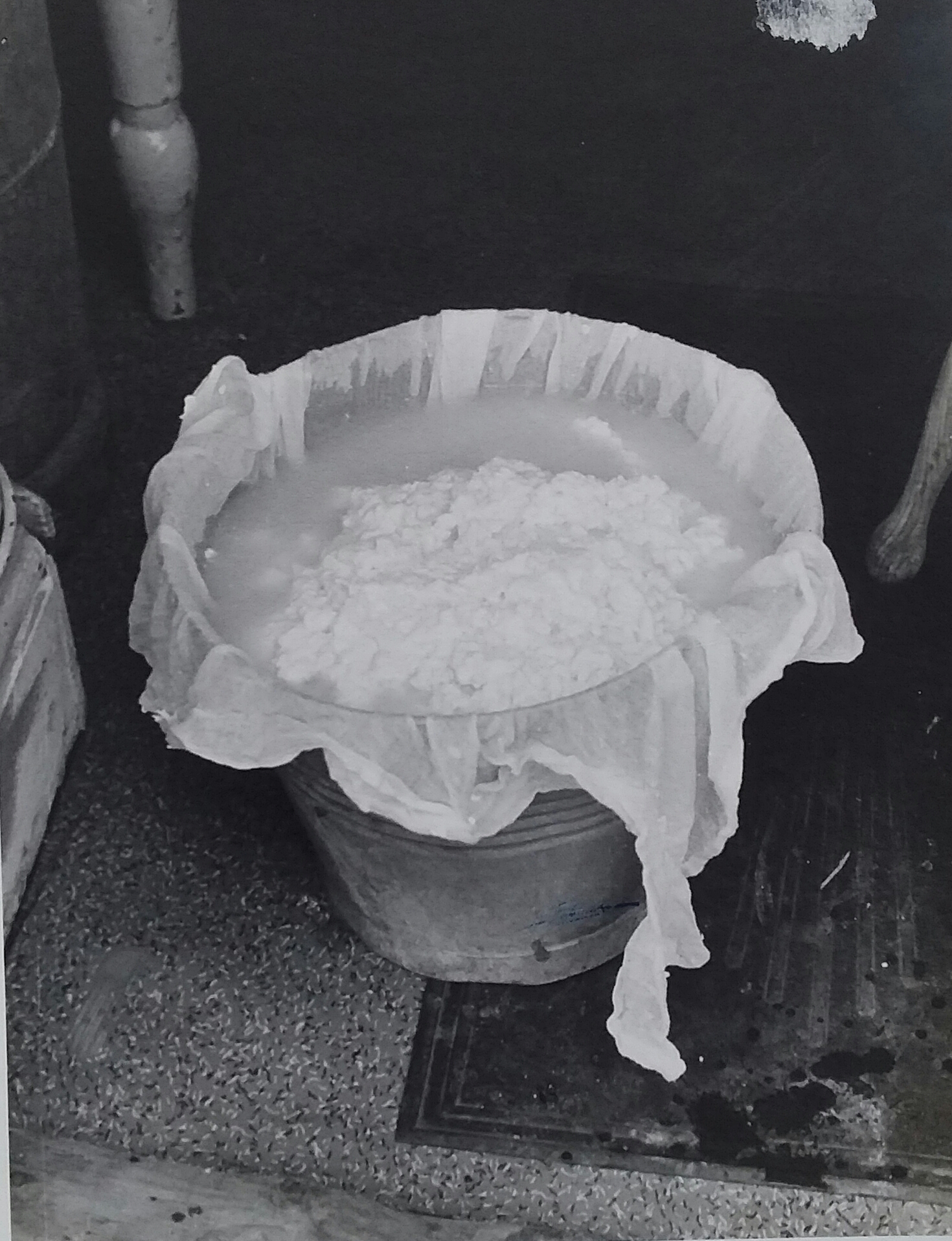
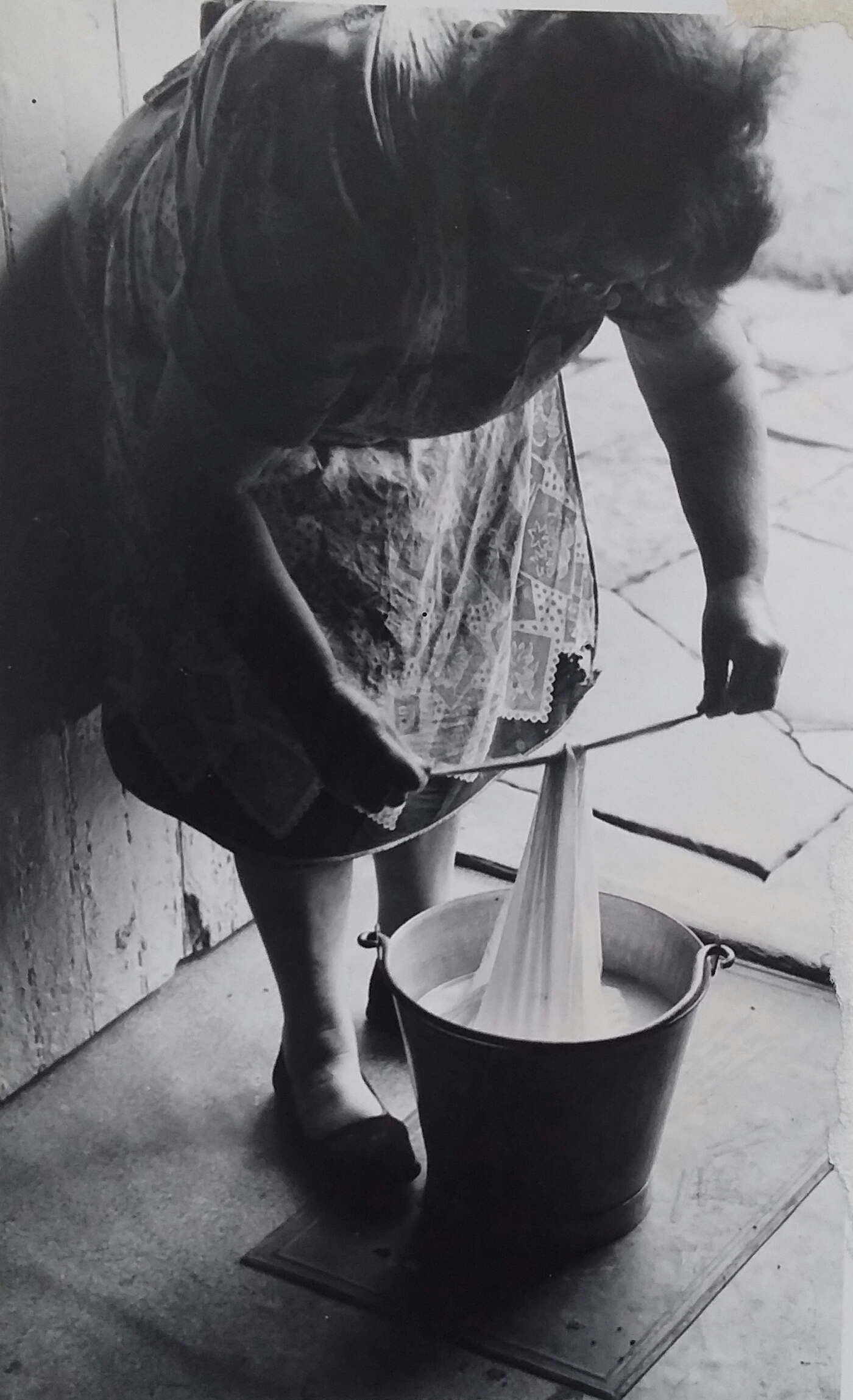
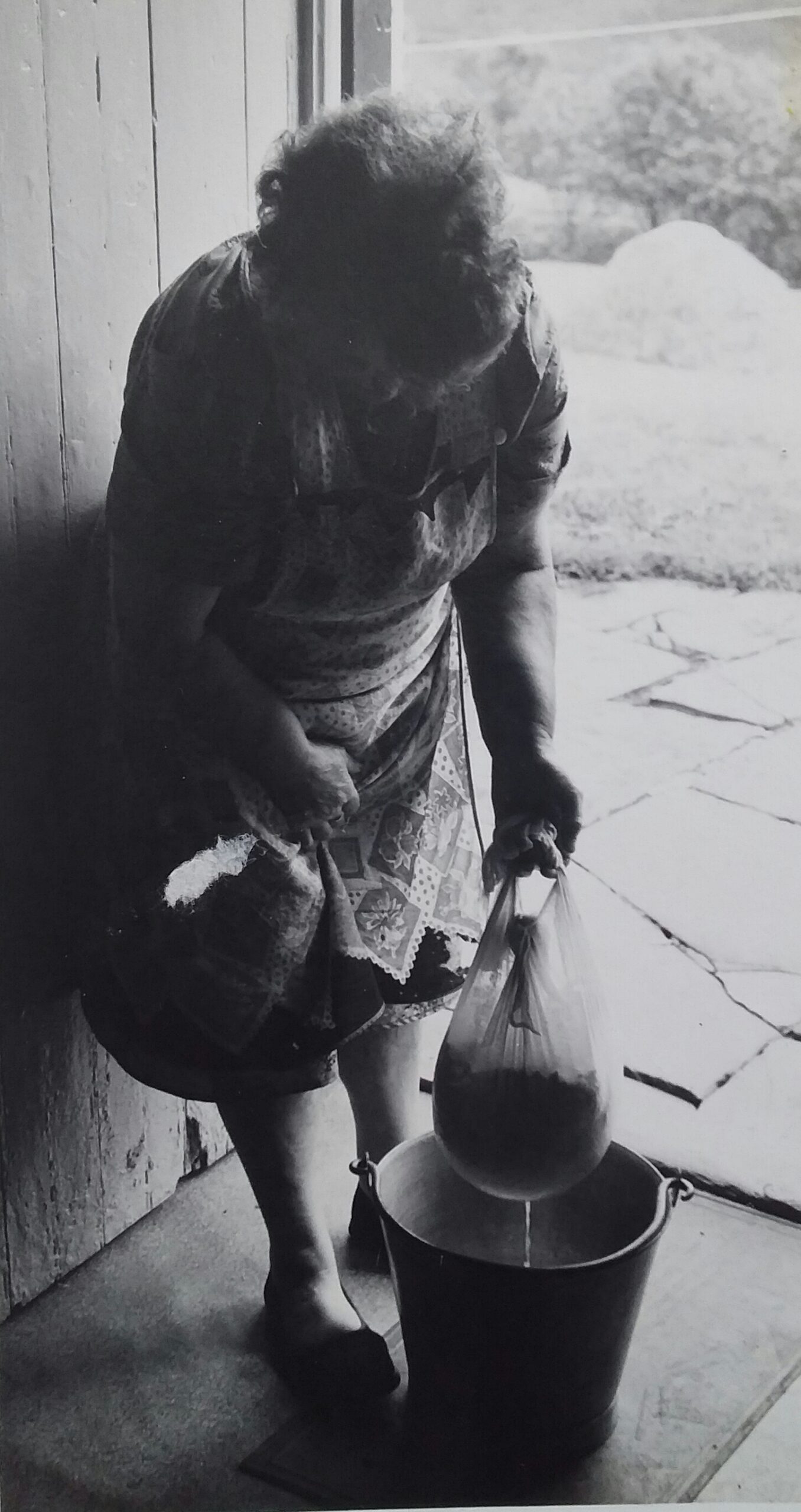
Tie and prepare to hang up in cloth to let surplus whey run out. Leave for about 4 hours
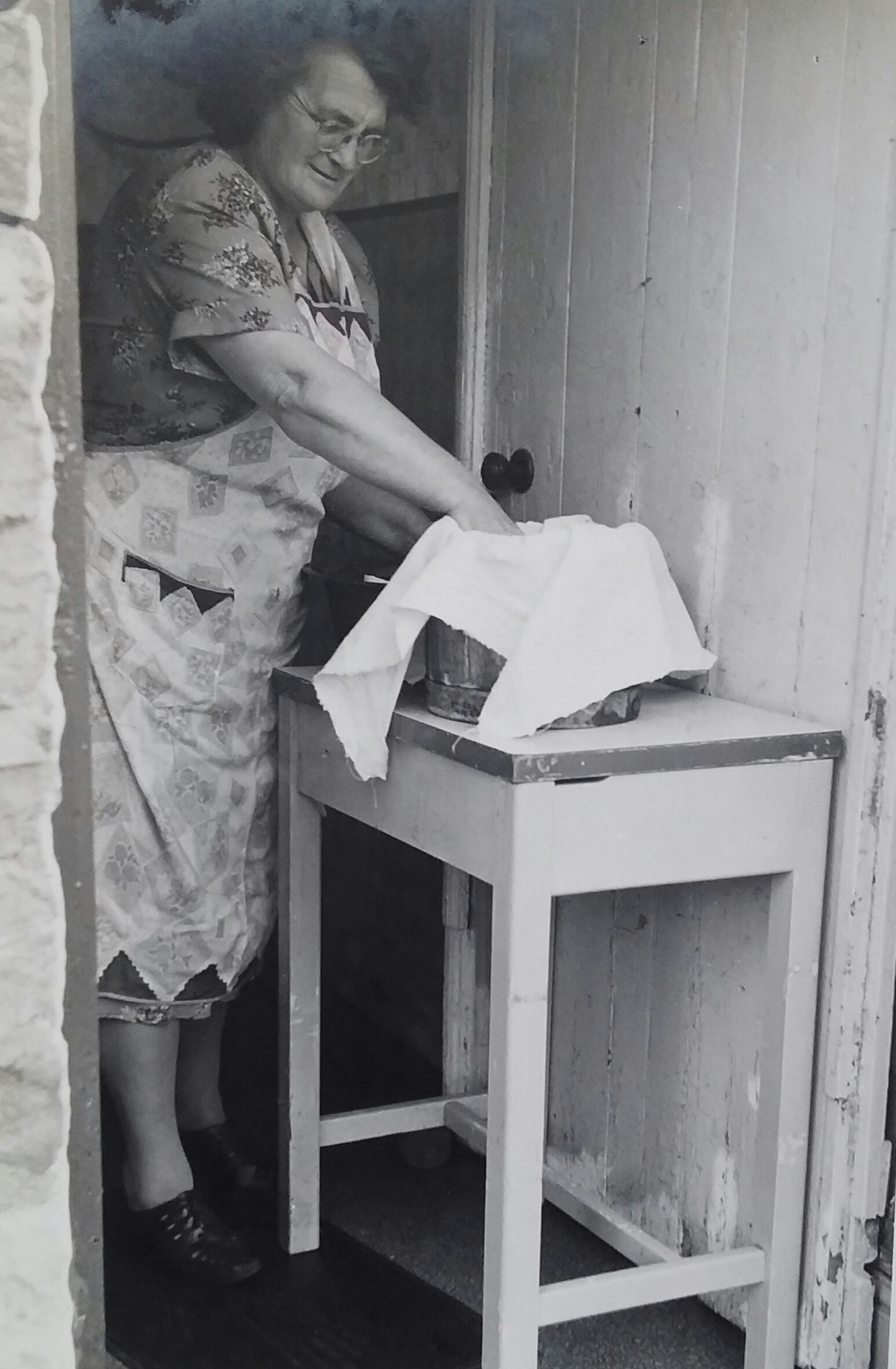
Putting a cloth into wooden vat ready for cheese curds.
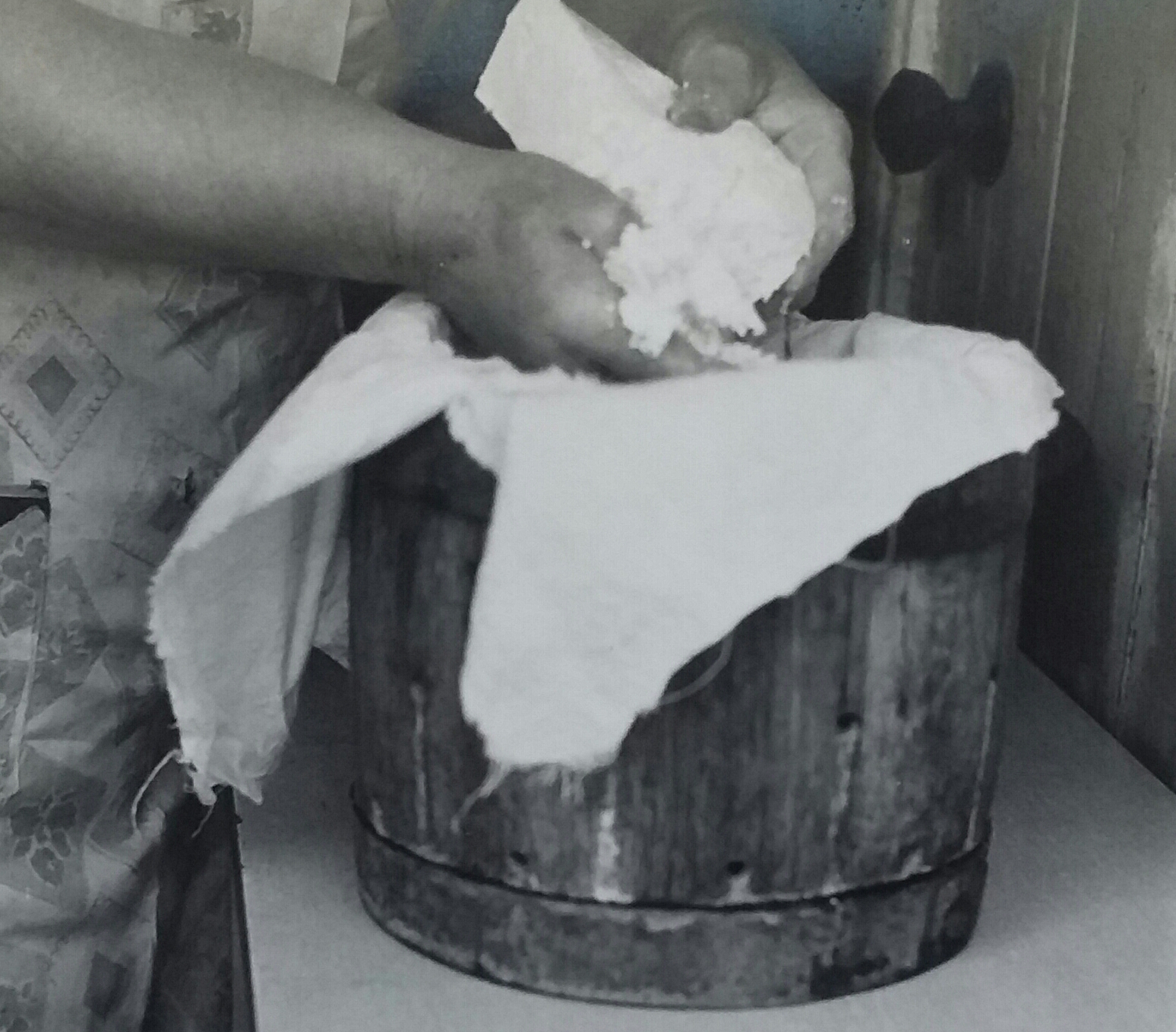
Crumbling the curd into small pieces and putting into vats.
Vats are constructed of wooden staves and metal hoops. They are pierced at the bottom and sides to give draining holes to allow whey to run out. They are made locally and vary in size from farm to farm.
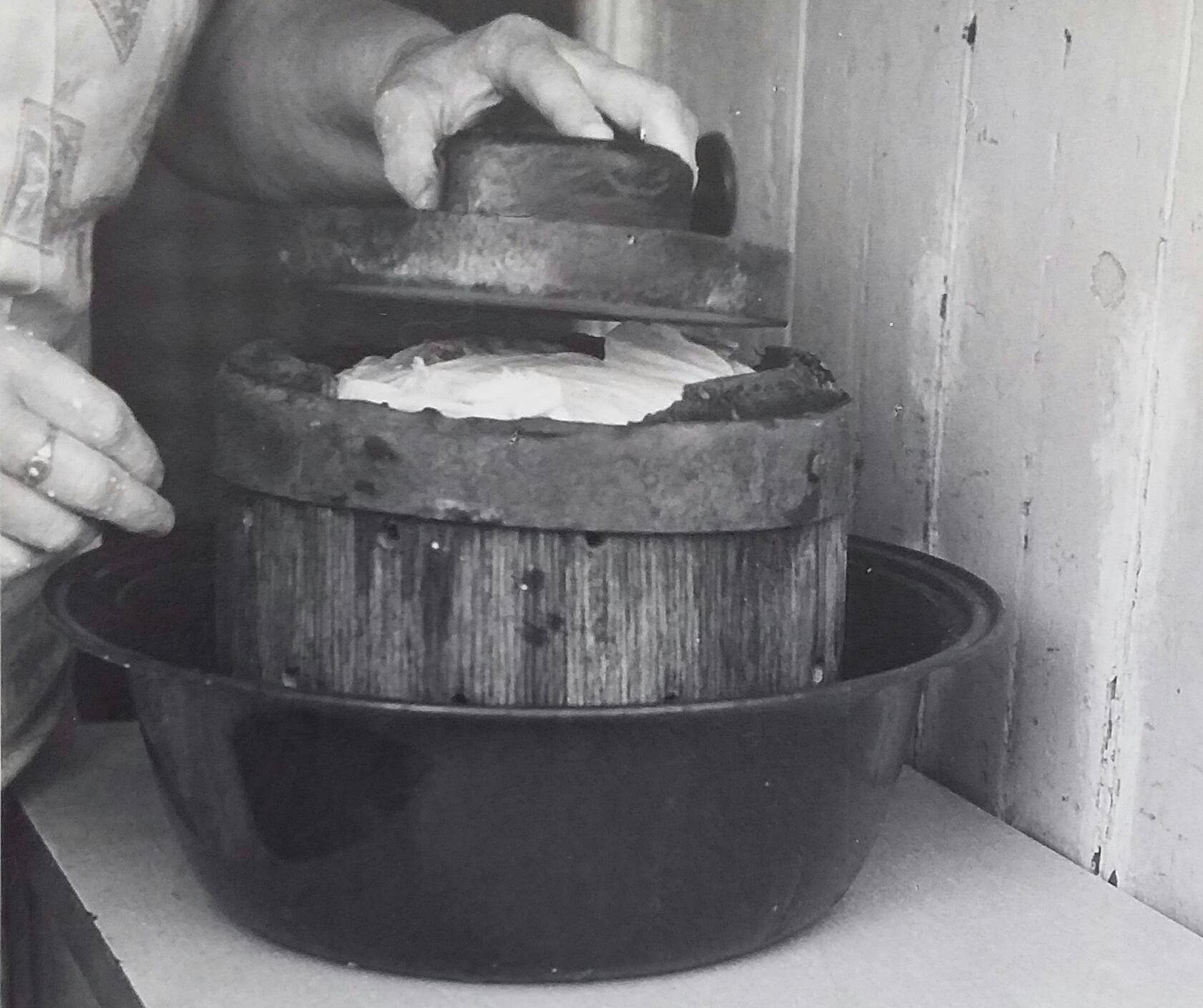
After the vat is filled as firmly as possible by hand, a ‘sinker’ (lid) is pressed down on top of the curds before the vat goes into the cheese press.
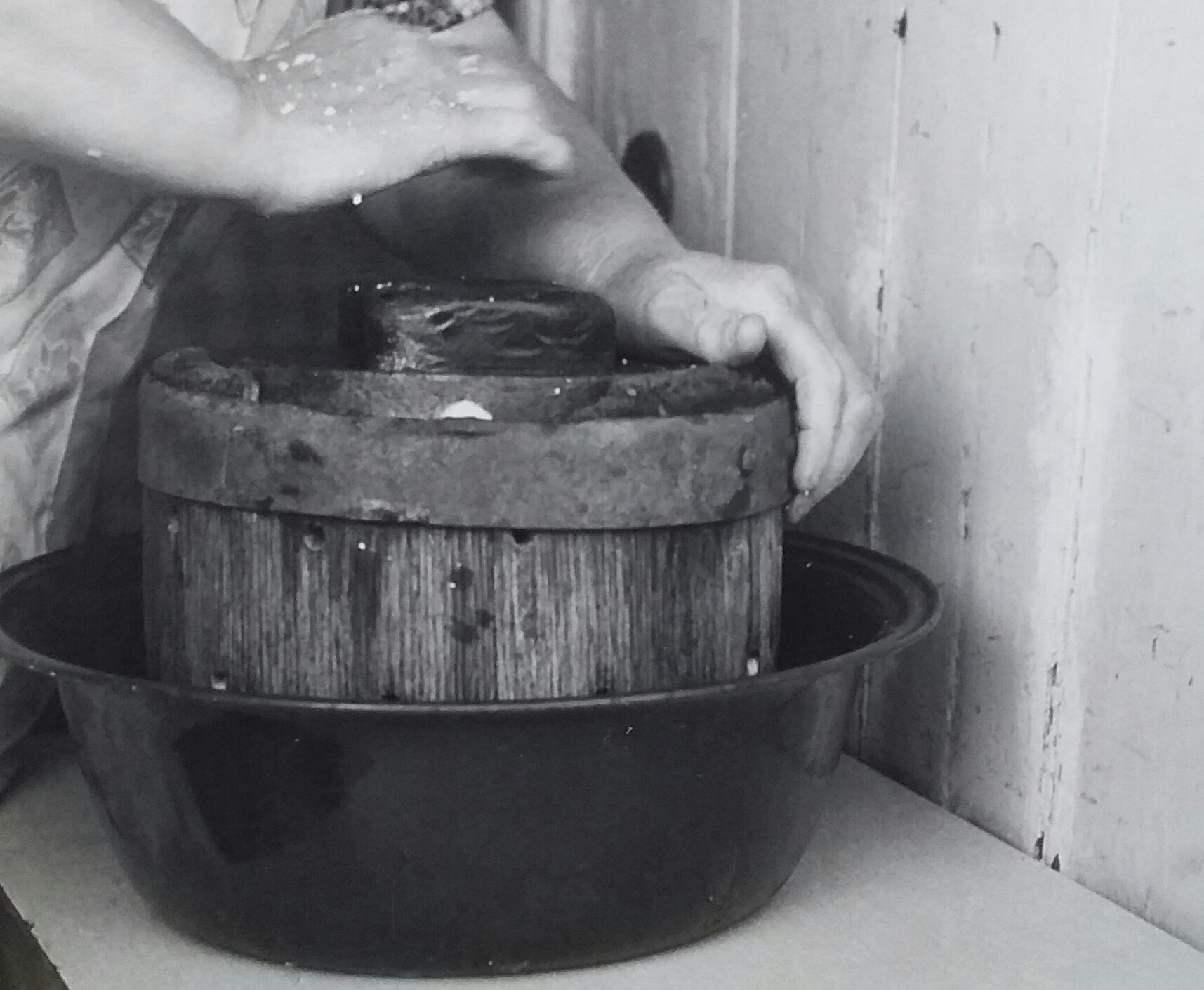
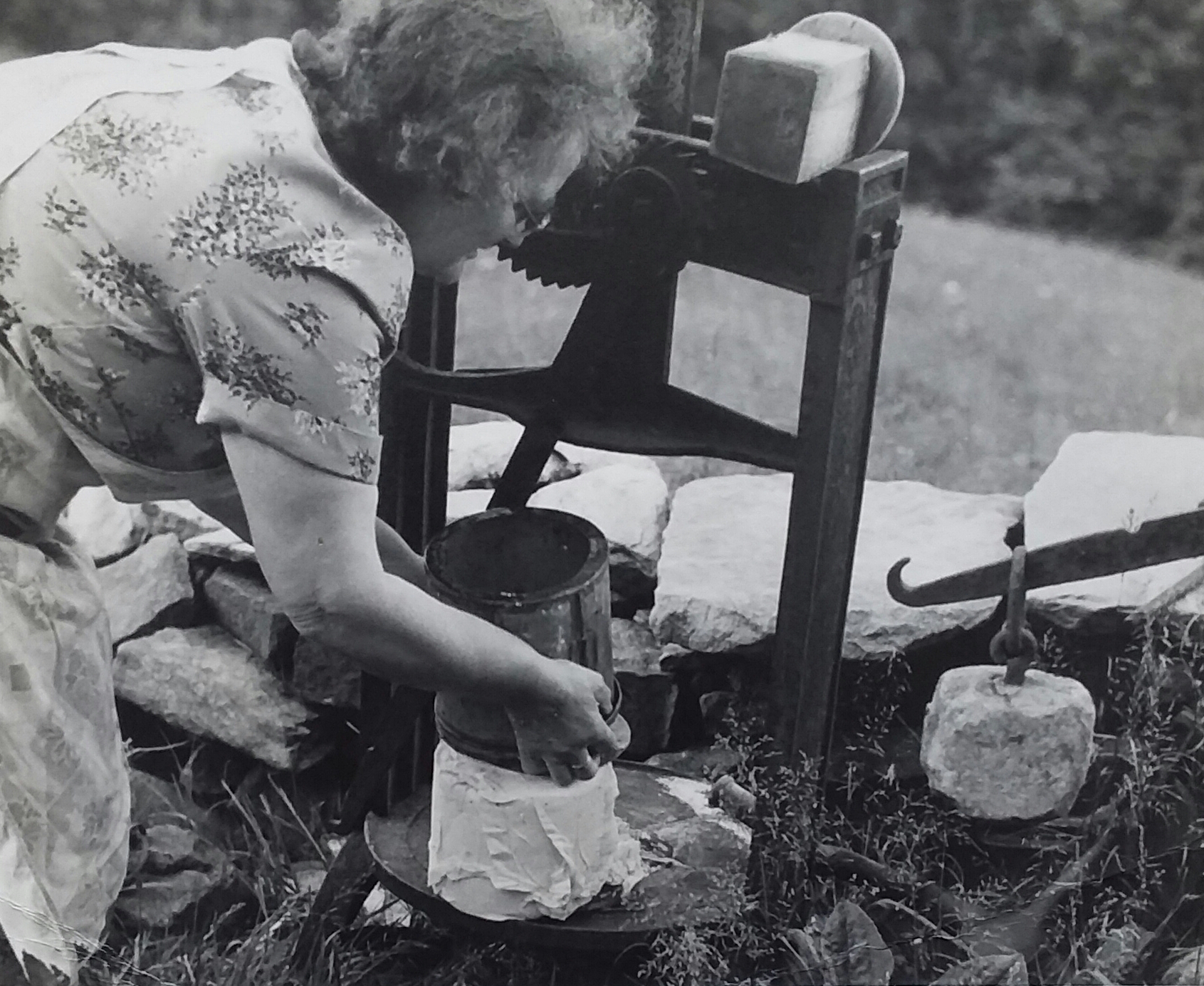
Putting vat into cheese press for the curd to be pressed for 24 hours.
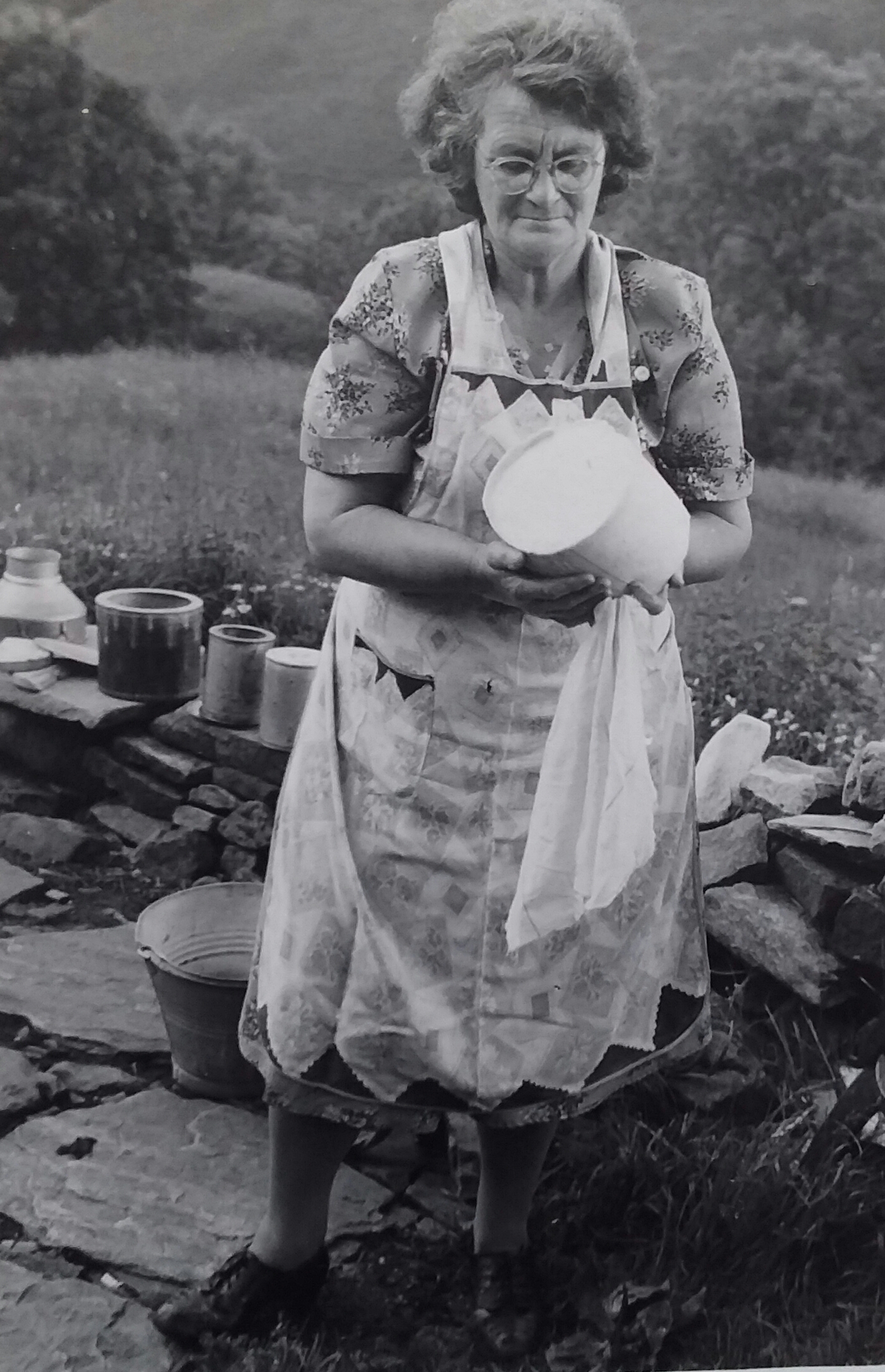
Turning the cheese after being pressed overnight into a clean cloth. It is then returned to the cheese press once more.
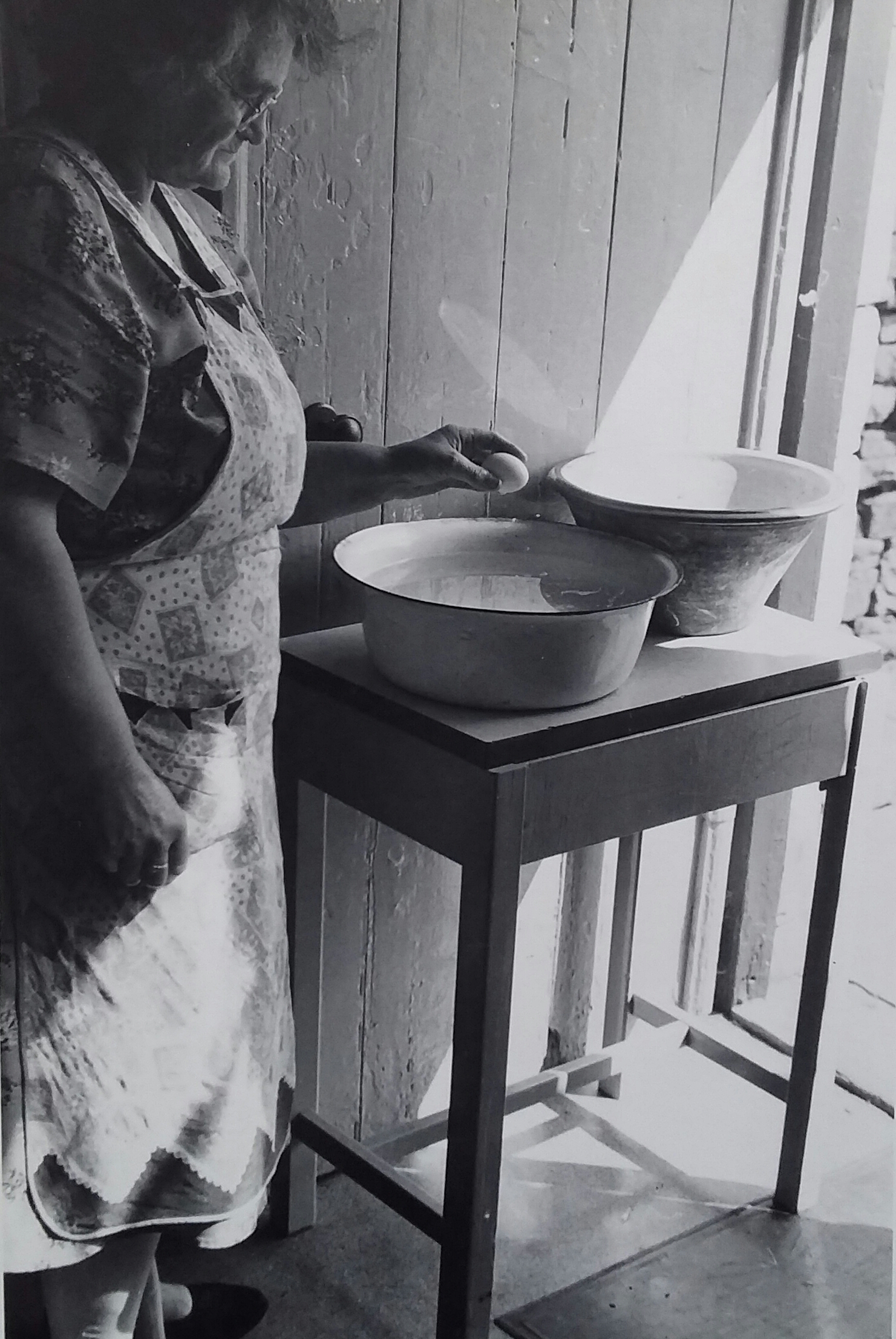
Cheese finished pressing being taken into pickle or brier.
The brier is made by pouring boiling water over salt. When the pickle has gone cold, the strength is tested by dropping an egg into it.
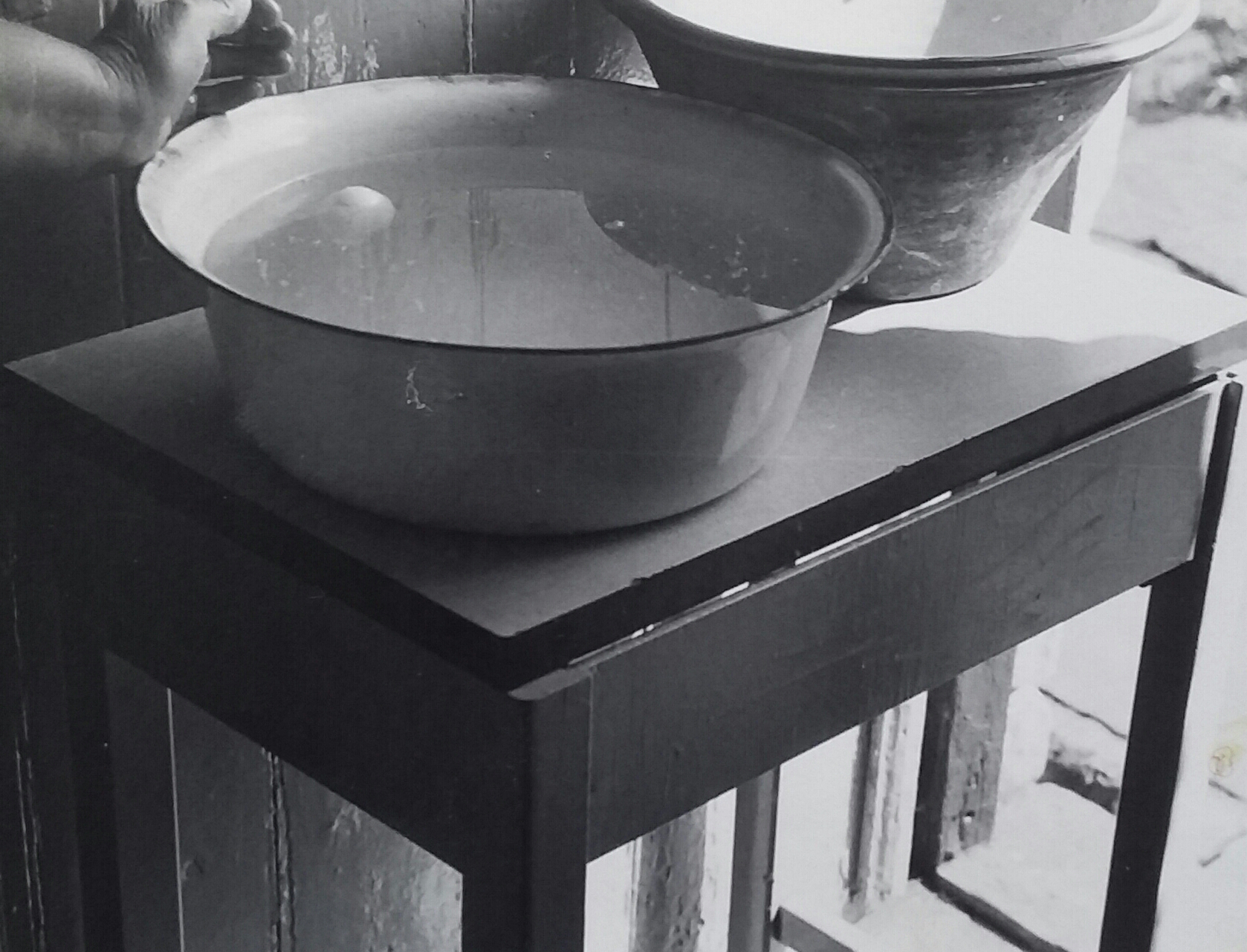
The egg should float on the top if the strength is correct.
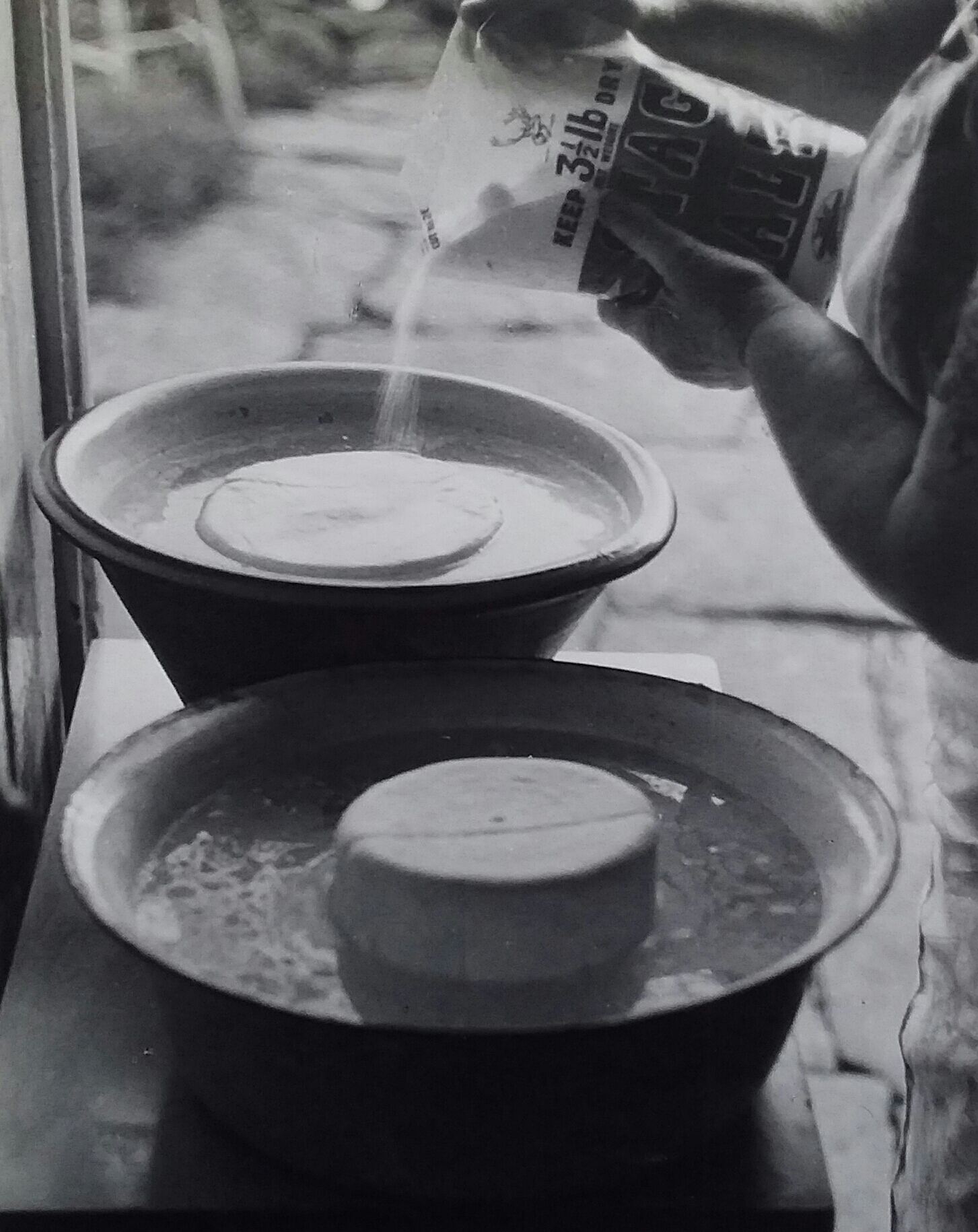
After the cheeses are put into the brier, a small quantity of salt is sprinkled on the top to keep up the strength which the cheese takes out.
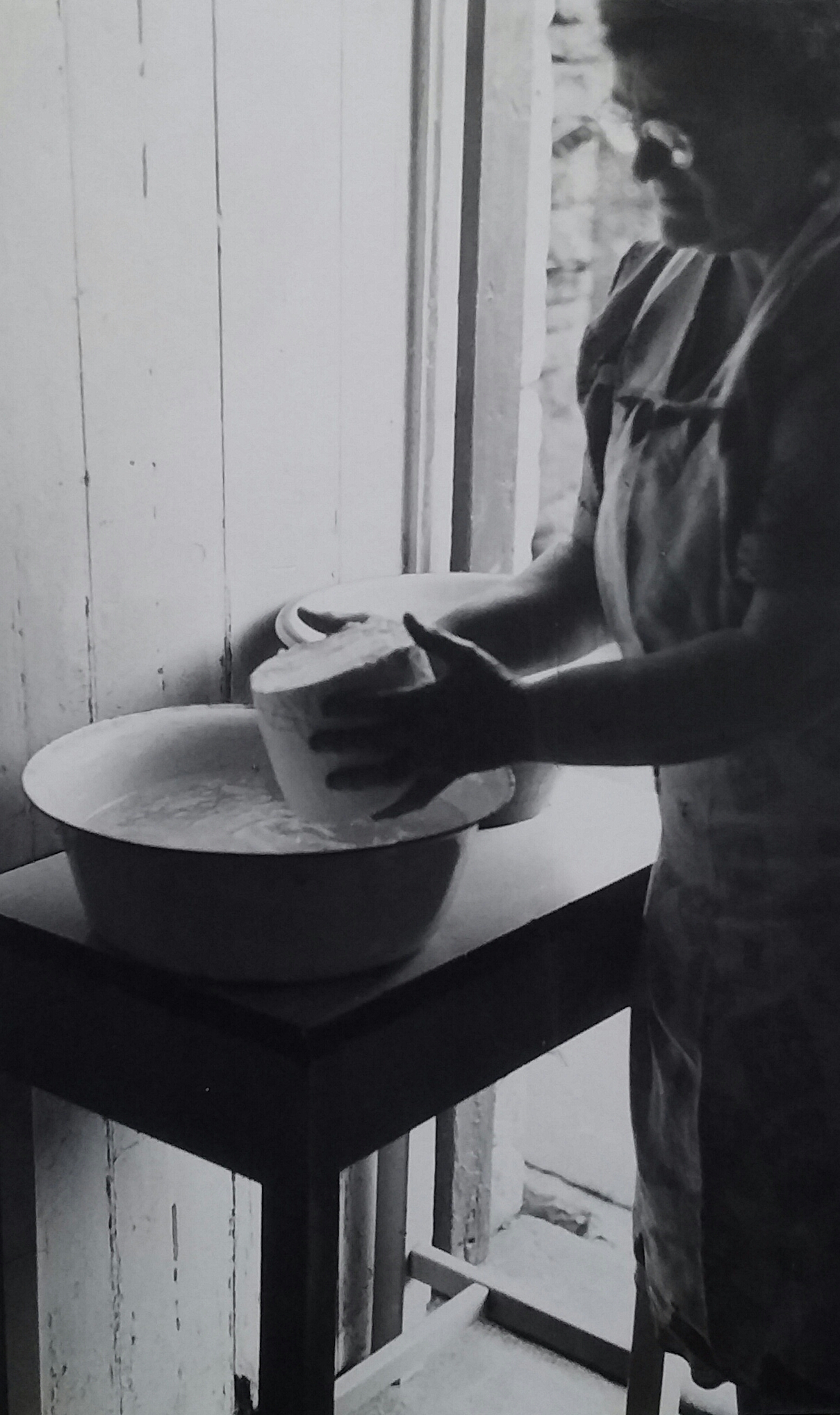
Lifting the finished cheese out of the brier.
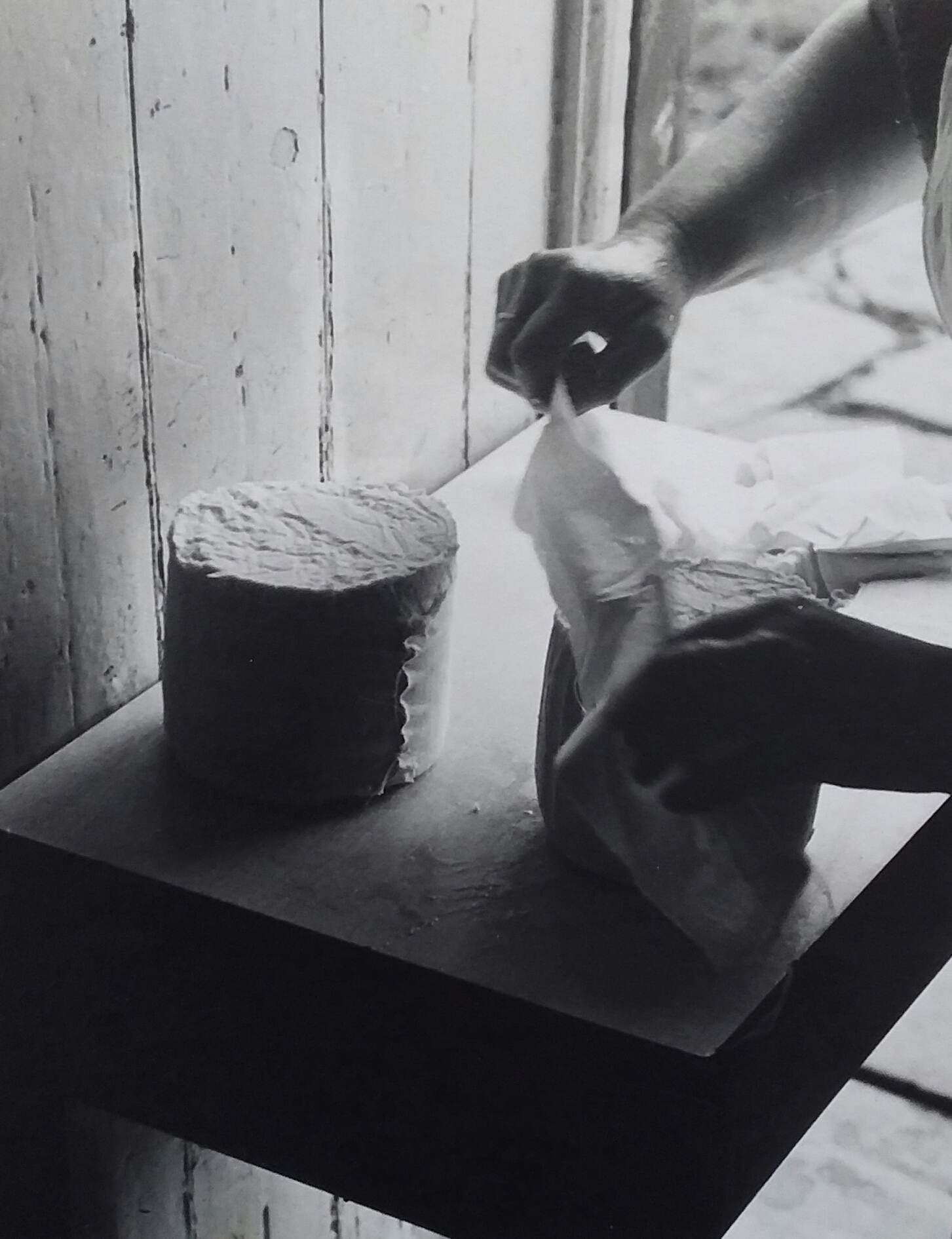
Sowing calico bandages to preserve the shape until the cheese is dry.
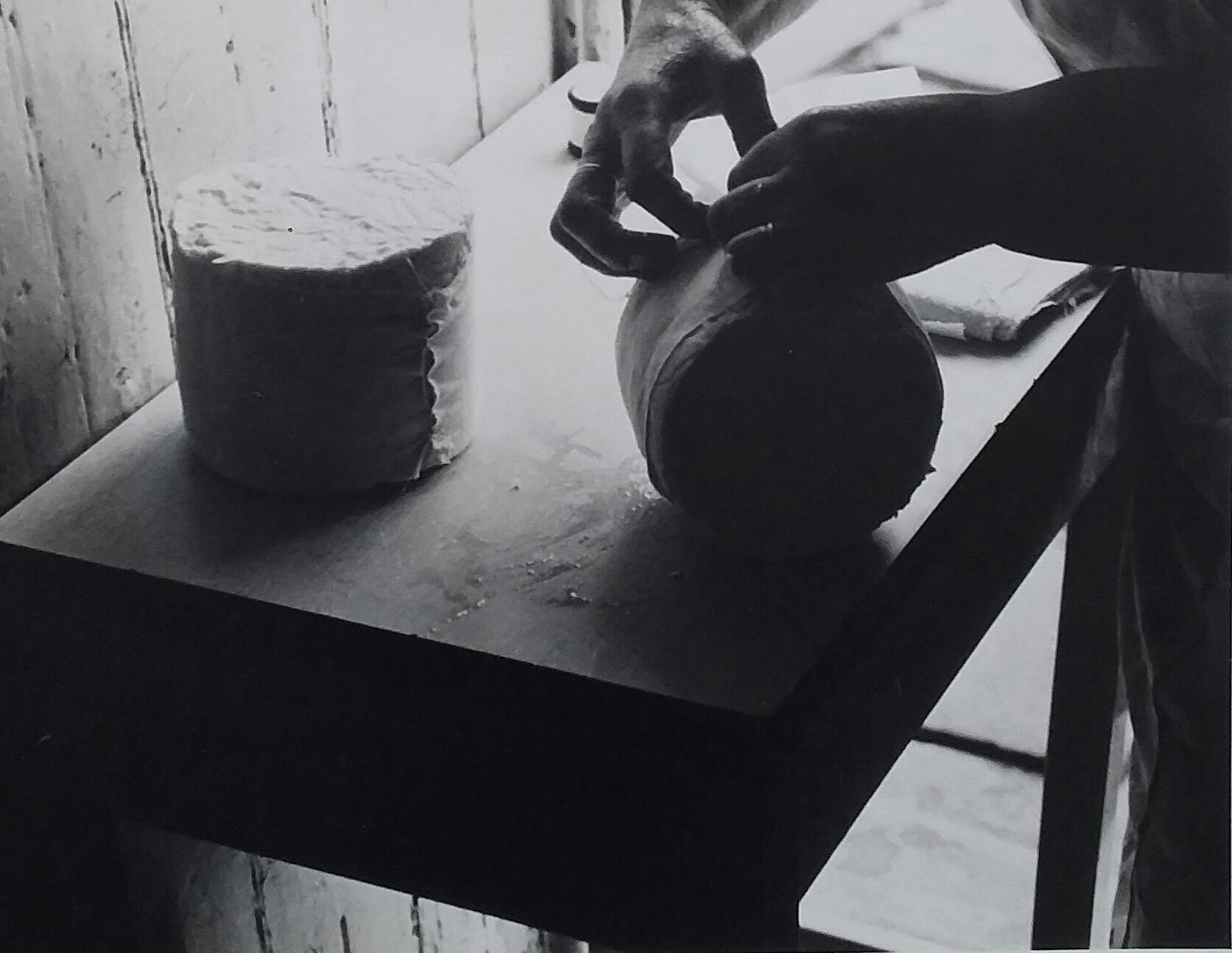
Sowing calico bandages to preserve the shape until the cheese is dry.